
Most people assume summer is the best time to install solar panels because of the long, sunny days. That assumption mixes up two different things: installation and generation are not the same process. Installation can happen safely and effectively in the monsoon; generation output is what dips slightly under cloud cover, and that’s a normal seasonal pattern, not a flaw in the system.
The rains don’t stop the installation process itself; they just call for a bit more planning around the weather. Finishing the job before summer means your system is fully commissioned and ready to generate at full capacity right when demand and daily sunlight are at their peak. Rather than sitting in an installer’s queue during the busiest season, here’s why getting your solar panels installed in monsoon may actually work in your favor — and what to know before you commit to it.
Freyr Energy has installed over 20,000 rooftop solar systems across multiple Indian states, making monsoon installations a routine part of its annual installation cycle. Based on this experience, the company has found that with proper planning around weather conditions, trained installation teams, and standard safety practices, rooftop solar systems can be installed safely and efficiently throughout the season.
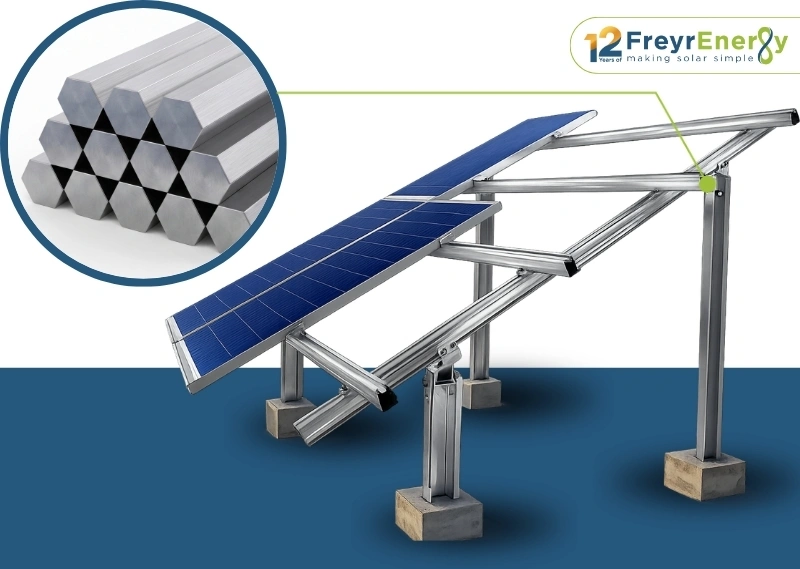
To support long-term reliability, Freyr Energy uses Tier-1 solar panels and wind-resistant Galvalume mounting structures engineered to withstand wind speeds of up to 150 km/h. These components provide enhanced structural strength, superior corrosion resistance, and dependable performance across India’s varied climate.
Quick Takeaways
- Monsoon is a practical time to install rooftop solar, with proper planning and safety measures.
- Lower seasonal demand may mean faster installation schedules and competitive pricing.
- Solar panels continue generating electricity during monsoon, although output is lower on cloudy days.
- Rainfall helps wash away loose dust, but periodic manual cleaning is still recommended.
- Installing before summer ensures your system is ready to maximize energy generation during peak sunlight months.
Is Monsoon the Right Time to Install Solar?
Constant clouds and monsoon are often assumed to be a bad start for a solar project. In reality, solar installation during monsoon is routine, with installers planning around roof work, mounting, and wiring between dry spells.
The core distinction:
- Installation — physically mounting and wiring the system — is largely weather-manageable and can be completed safely in monsoon with the right precautions.
- Generation — how much electricity the system produces on a given day — is affected by cloud cover, since panels rely on light intensity.
One group assumes installing in the rainy season is pointless because generation will be lower. The other sees this as the smart window — the off-season, with better availability and pricing.
5 Reasons to Go Solar This Monsoon
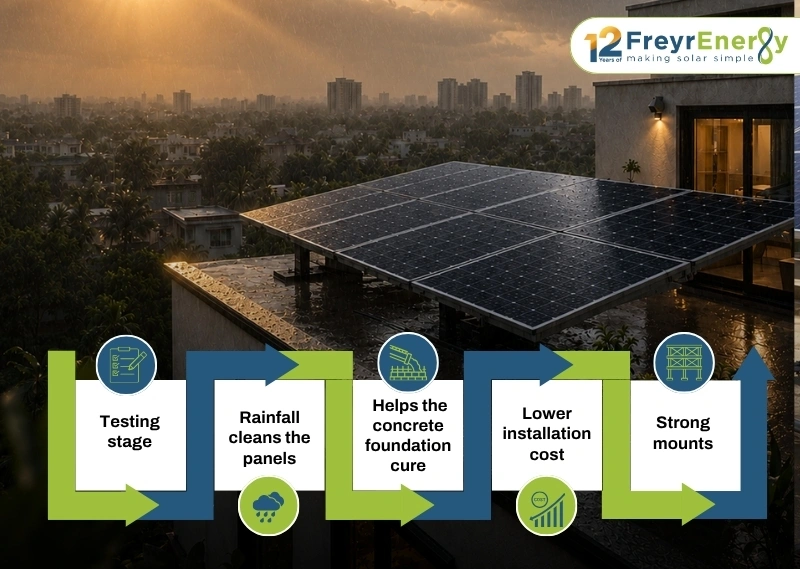
1. A Real-World Testing Stage
Monsoon weather swings between bright sun, rain, and heavy cloud within the same day. That variability gives installers a genuine stress test for a freshly commissioned system — checking wiring, inverter response, and panel tilt across changing conditions, rather than a stretch of uniformly sunny days. Any fine-tuning the system needs tends to surface early this way, well before it heads into peak summer performance months. It’s also a useful window for confirming the system is performing as expected before generation ramps up.
2. Rainfall Naturally Cleans the Solar Panels
Panels installed during monsoon get rinsed by rain regularly, which means less dust and grime buildup than in drier months. Since panels sit in open, unobstructed spots to catch direct sunlight, they’re also fully exposed to this natural rinsing—a small but genuine head start for a newly installed system. It’s one reason routine panel cleaning matters less during this season than people expect.
However, rainfall mainly removes loose dust and light debris. Stubborn dirt, bird droppings, and sticky residue may still require periodic manual cleaning to maintain optimal performance.
3. It Helps the Concrete Foundation Cure Properly
Solar mounting structures typically sit on a concrete base, and concrete needs sustained moisture to cure and reach full strength. Monsoon rainfall provides that naturally over the entire curing period, rather than relying on manual watering.
Concrete requires adequate moisture during curing to achieve its designed strength. During monsoon, natural moisture can help maintain curing conditions, provided the foundation is properly protected and installed according to engineering standards.
4. Lower Solar Panel Installation Cost
During the monsoon, solar panel installation demand is often lower than during the pre-summer rush. Some installers may offer promotional pricing or faster scheduling, although savings vary by location, installer, and system size.
5. Strong, Weather-Rated Mounts
Solar mounting structures are built from rust-resistant materials like aluminum, galvanized steel, and zinc-coated components, engineered to hold firm through heavy rain, wind, and general outdoor wear. Freyr Energy’s guide to solar mounting structures covers the materials and design choices behind this in more depth.
Monsoon vs. Summer Installation: At a Glance
| Factor | Monsoon Installation | Summer Installation |
| Installer availability | Higher (off-season) | Lower (peak demand) |
| Typical pricing | More competitive | Higher due to demand |
| System testing | Stress-tested across variable conditions | Limited to uniform sunny conditions |
| Generation at install | Lower (diffused light) | Higher (direct sunlight) |
| Foundation curing | Naturally aided by rainfall | May need manual watering |
| Readiness for peak season | Fully commissioned ahead of summer | Installed during peak demand |
Can Solar Panels Generate Electricity During Monsoon?
Yes — a newly installed system starts generating power right away, even with monsoon clouds overhead. Output is naturally lower than on a clear day because panels are working with diffused light rather than direct sunlight. That’s a normal seasonal pattern, not a sign of a problem. Generation returns to full strength once clearer skies return.
Generation during the monsoon can be 20–30% lower than on clear summer days, depending on cloud cover, rainfall intensity, location, and the orientation of the solar panels. That’s a normal seasonal variation and not an indication of poor system performance.
For ongoing care, see our latest blog: solar panel maintenance guide.
Things to Consider Before Installing Solar During Monsoon
The physical installation of a residential rooftop solar system is typically completed within 45 days. However, the overall commissioning timeline, including inspections, approvals, and net metering, may take up to an additional 45 days, depending on the local DISCOM and regulatory processes. During the monsoon, heavy rainfall may occasionally extend the on-site installation schedule.
- Buffer your timeline. Heavy, unpredictable rain can push back specific work days, so build slack into your expected completion date.
- Check your roof first. Look for existing leaks or waterproofing issues before mounting hardware goes up.
- Confirm installer safety practices. Working on wet surfaces requires proper precautions — ask your installer how they handle this.
- Prioritize electrical safety. Monsoon brings a higher chance of lightning, so make sure grounding and surge protection are properly handled.
Conclusion
Monsoon installation is a smarter-than-expected time to go solar. Between cost advantages, natural stress-test conditions, and having your system ready well before summer’s peak demand, there’s a solid case for not waiting for sunnier skies to get started. To recap: lower cost, real-world testing, self-cleaning panels, properly cured foundations, and weather-rated mounts—that’s the case for monsoon in one line.
If you’re planning rooftop solar this year, waiting for summer isn’t always the smartest move. Installing during the monsoon can help you avoid peak-season delays, prepare your system before high-demand months, and potentially benefit from better installer availability. Use Freyr Energy’s Solar Calculator or request a site survey to find the right solar solution for your home.