
Every monsoon brings the same question for solar panel owners: Will my solar panels still work in the rainy season, or will power generation drop significantly?
The good news is that solar panels continue to generate electricity throughout the monsoon. However, because of frequent cloud cover and reduced sunlight, power generation can temporarily drop to around 30–40% of a clear day’s output. This seasonal dip is normal and improves once sunny weather returns.
What genuinely needs attention isn’t the solar panels themselves—it’s everything around them. Moisture in electrical connections, corrosion on mounting structures, vegetation growth causing shade, and poor drainage can all affect your system’s performance if left unchecked.
With a few simple maintenance checks before and during the rainy season, you can keep your rooftop solar system safe, efficient, and generating reliable power. This guide covers everything you need to know about maintaining your solar panels during the monsoon.
Key Takeaways: Solar Panel Maintenance During Monsoon
- Solar panels continue to generate electricity during the monsoon, but output may temporarily decrease due to reduced sunlight and cloud cover.
- Rain itself does not damage solar panels; most monsoon-related issues are linked to electrical connections, inverter faults, shading, or water ingress.
- Regular monitoring, cleaning, and seasonal inspections can help maintain consistent solar performance.
- Avoid checking electrical components yourself during wet conditions. Contact a qualified solar professional if you notice faults or unusual performance drops.
- Solar generation usually improves once sunny weather returns and the monsoon season begins to recede.
Do solar panels need maintenance during rainy season?
Panels are sealed and tested to withstand rain, hail, and even humidity. Solar panels work during the rainy season but require maintenance to ensure steady power output. The real value of maintenance lies in distinguishing weather dips from genuine faults, since constant cloud cover makes them hard to tell apart.
Related article: Tips for Maintaining Solar Panels during the rainy season
How does the rainy season affect solar panel performance?
Solar panels continue to generate electricity during the rainy season, but cloud cover reduces the amount of sunlight reaching the panels. As a result, electricity generation temporarily decreases. A common concern among homeowners is whether rain can damage solar panels. The answer is no—rain itself does not damage solar panels. The real risks come from lightning, wind-driven debris, or water entering already-damaged seals or electrical components.
Based on Freyr Energy’s experience installing rooftop solar systems across India, most monsoon-related service requests are not due to damaged solar panels. Instead, they are commonly caused by loose electrical connections, inverter faults, water ingress into electrical components, or vegetation creating new shading over the panels. Regular inspections can help identify these issues before they affect system performance.
When Will Solar Generation Return to Normal?
A temporary drop in solar generation during the monsoon is completely normal. As cloud cover reduces and sunny weather returns, your solar panels will start producing their usual output again. In most parts of India, generation gradually improves once the monsoon season begins to recede. If your system continues to generate significantly less power even on clear, sunny days, it’s a good idea to have it inspected by a qualified solar professional.
Monsoon Safety Tips for Solar Panel Owners
While basic visual checks are helpful, safety should always come first during the rainy season.
- Avoid climbing onto a wet or slippery rooftop to inspect or clean solar panels.
- Never touch cables, connectors, or electrical components with wet hands.
- Do not attempt electrical repairs or open junction boxes yourself.
- If you notice exposed wiring, water inside electrical enclosures, or persistent inverter errors, contact a qualified solar technician.
Solar Panel Maintenance Tips for Monsoon
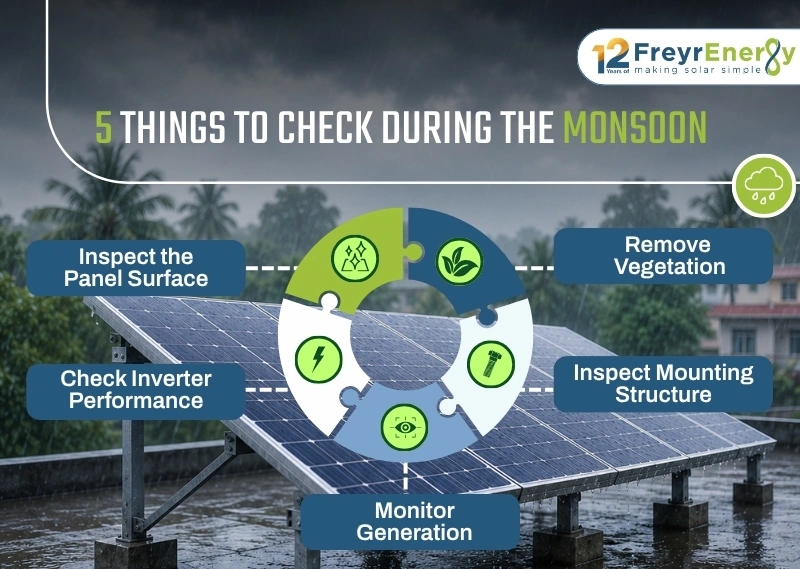
- Inspect the Panel Surface : After the rain, check the panel surface for anything that cannot wash off on its own, such as silt, leaves, or bird droppings. Use a soft, damp cloth to clean the surface without any abrasives.
- Check Inverter Performance: A drop in generation during cloudy days is normal, but an inverter throwing error codes, restarting on its own, and reading zero when the sun is shining is different. If performance doesn’t recover on a sunny day, have it inspected by a qualified solar technician.
- Inspect Mounting Structure: Humidity can accelerate rust on the unprotected bolts, frames, and brackets. A short inspection before the rain catches early corrosion, which is good for output and structural safety.
- Monitor Generation: Always compare your daily electricity generation with your system’s previous performance. A gradual dip that matches cloudy weather is normal, but a sustained drop even after sunny weather returns may indicate an issue that needs attention. If your rooftop solar system is connected to the Freyr Energy App, monitor daily generation trends to quickly identify unexpected drops in performance during the monsoon.
- Remove Vegetation: Monsoon is a season when plants near the rooftop grow, and even partial shading from a new branch can reduce output. Trim the vegetation before and during the season to keep the panels free of obstructions from plants.
- Check Wiring: Visually inspect cables, junction boxes, and connectors for signs of damage or corrosion. If you notice any issues, contact a qualified solar technician instead of attempting repairs yourself.
Related article: Tips for Maintaining Solar Panels during the rainy season
Common Solar Panel Problems During Rainy Season
Problem | Cause | Solution |
Sudden drop in generation | Heavy cloud cover or new shading | Compare with the past data, remove branches, and inspect if it persists on sunny days. |
Inverter errors or repeated restarts | Voltage fluctuations or moisture inside the unit | Restart the inverter if recommended in the user manual. If the problem persists, contact a qualified technician. |
Water pooling near the junction box | Worn seals or poor drainage | Replace seals and improve water runoff |
Rust on mounts or bolts | Prolonged exposure to humidity | Apply an anti-corrosive coating, replace rusted hardware |
Lower output even on clear, sunny days | Dried silt or debris left on the surface | Wipe the panel with a damp cloth |
Loose wiring | Moisture that has worked into the connectors | Have the wiring re-secured by a professional |
No generation despite daylight | Tripped breaker or a deeper electrical fault | Check the breaker or fuse first. Contact a qualified technician if unresolved. |
Pre-Monsoon Solar Maintenance Checklist
- Clean the panel surface thoroughly before the season starts.
- Tighten all mounting bolts and structural connections.
- Treat early rust or corrosion before it spreads.
- Trim trees and vegetation that can shade the panels.
- Inspect the cables, junction boxes, and connectors for wear.
- Ensure the earthing and lightning protection system is in good condition.
- Clear drainage around the mounts so water doesn’t pool.
- Test the inverter and record the output daily.
Does Rainy Weather Increase Your Electricity Bill?
Yes, it can, but only temporarily. During extended periods of cloudy or rainy weather, your solar system generates less electricity, which means your home may draw more power from the grid. This can slightly increase your electricity bill or reduce your net metering credits. Once sunny weather returns, solar generation improves and your system resumes producing its normal output.
When to Connect with Solar Professionals?
Reach out to a solar professional if you notice:
- Drop in generation on sunny days
- Inverter shows persistent errors.
- Moisture inside an electrical enclosure
- Panel is cracked
- The mount shows rust or looseness.
Final Thoughts
A temporary drop in solar generation during the monsoon is completely normal. However, regular inspections, timely cleaning, and monitoring your system’s performance can help prevent small issues from becoming expensive repairs. With a little seasonal maintenance, your solar panels can continue generating clean energy throughout the rainy season.
If you notice persistent inverter errors, damaged panels, loose wiring, or lower-than-normal power generation even on sunny days, it’s best to have your system inspected by a qualified professional.
For expert solar maintenance and support, reach out to Freyr Energy or call 9000828333.