
Solar panels are designed to supply reliable electricity for a long time. But many homeowners experience abrupt drops in electricity production and immediately think that the worst is happening. Reduced output does not always indicate that the system is failing. Most of the time, it’s a matter of common sense.
This article outlines the most common causes, the easy troubleshooting techniques, and the best and appropriate time to contact an expert.
What to Do If Your Solar System Stops Generating Enough Power
Signs Your Solar Panels Are Not Producing Enough Power
Some signs can appear before homeowners realize there’s an issue.
- Costs for electricity are higher.
- Energy generation is reduced when monitoring apps
- Savings reduced
- Frequent inverter warnings
Understanding Normal Seasonal Variations
There aren’t any dips that are a concern. Changes in weather, shorter winter days, and changes in temperature all impact the amount of power your panels generate. These changes are normal and typically correct themselves in the changing seasons.
Common Reasons Solar Panels Stop Generating Enough Power
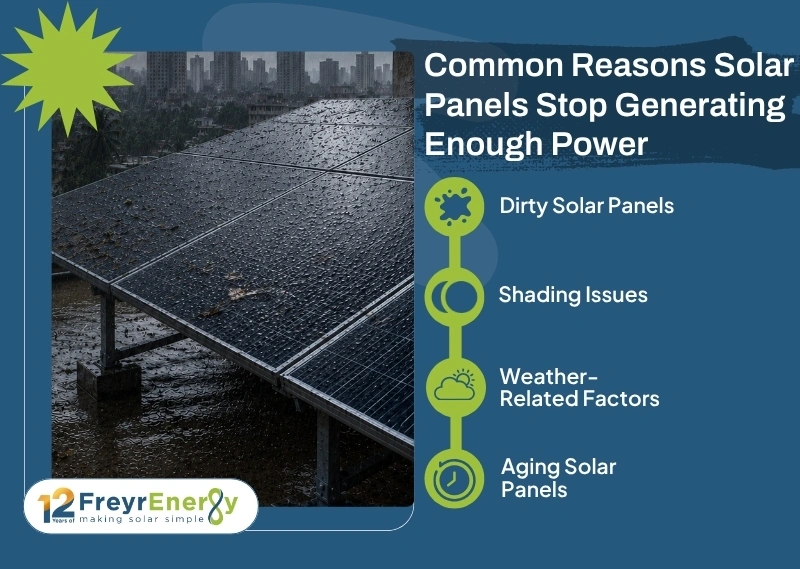
Dirty Solar Panels
Bird droppings, dust, and even leaves and other debris can accumulate on panels in time, blocking sunlight and reducing output.
Shading Issues
The growth of trees, the construction of new structures, and seasonal changes in shadow could all cut into the panels’ exposure to the sun.
Weather-Related Factors
Heavy clouds, massive rainfall, and pollution could temporarily limit the amount of sun that can penetrate your body.
Aging Solar Panels
A natural decline in performance in time is normal and incorporated into the way panels are evaluated, but it’s not an indication of failure.
Check the Inverter First
Why the Inverter Matters
Inverters convert solar energy to usable electrical energy and act as the control center of the system.
Warning Signs of Inverter Problems
Error codes, red warning lights that flash, or even no display are the most obvious signs that require attention.
Can Inverter Problems Reduce Solar Output?
Yes. Inverter problems can result in temporary generation loss or, in more severe cases full production shutdowns.
Related article: Choosing the Right Solar Inverter: A Complete Buyer’s Guide
Step-by-Step Solar Panel Troubleshooting Guide
Step 1: Review Your Monitoring System
Compare the historical and current production to identify the real causes of seasonal dips.
Step 2: Inspect Panels Safely From Ground Level
Check for obvious cracks, dirt, or physical damage that you can’t see without climbing on the roof.
Step 3: Check for Shading Changes
Buildings, trees, and other temporary obstructions can influence exposure over time.
Step 4: Verify Inverter Status
Examine for any warning or error codes displayed on your display.
Step 5: Compare Weather Conditions
Check for recent storms or prolonged cloud cover before you consider equipment failure.
Related article: How to Troubleshoot common solar panel problems
What Can Make a Solar Panel Stop Working?
- Physical Damage: Storms, hail, and fallen objects can be destructive to panels or damage internal components.
- Electrical Faults: Issues with the connector and faulty wiring may disrupt the flow of electrical current completely.
- Hot Spots and Cell Damage: Localized hot spots could cause cell damage, which can affect the overall energy production.
- Installation Def
Is a 10-20% drop in solar output normal?
ects: Inadequate installation can lead to inefficiencies that only become apparent several months or years later.
Is a Drop in Solar Output Normal?
Understanding expected performance degradation
Panels experience a slight loss of their efficiency every year; it’s a normal annual degradation rate that is accounted for in warranty.
When a drop becomes a concern
A sudden drop in production or a consistent decline over weeks is not typical aging.
It’s a matter of the root cause. If it is consistent with seasonal changes, it’s probably good. If not, then it could indicate an issue with the equipment that warrants investigation.
When Should You Call a Solar Professional?
Warning Signs That Need Expert Attention
Inverter problems that persist, damaged panels, or sharp decreases in generation could be the reason to call a specialist.
How Often Should Solar Panels Be Professionally Serviced?
The majority of maintenance programs recommend an inspection at a minimum every year. This helps to detect small problems prior to them getting bigger -one of the main advantages of preventive inspections.
Related articles: Top 10 Signs Your Solar Panels Need Servicing | Why Should You Trust Only Professional Residential Solar Installers?
Will Your Warranty Cover Reduced Solar Performance?

Product Warranty vs Performance Warranty
A warranty on the product covers problems, and a performance warranty promises a specific output in the course of time.
| What are covered? | What are not covered? |
|
|
How to Prevent Future Solar Performance Issues
Regular Cleaning
Stops dust and other debris from slowing down production.
Monitoring System Performance
It helps to identify dips before they become serious and stops them from developing into bigger problems.
Scheduling Annual Inspections
Find small problems before they become expensive.
Managing Nearby Vegetation
This prevents shade problems from advancing over time.
Related articles: 4 Solar Tips to Increase Solar System Performance | 7 Tips & Strategies to Enhance Solar Panel Efficiency
Conclusion
The majority of issues with solar power can be traced back to weather, shading, dirt buildup, or inverter problems. Homeowners who regularly monitor their systems are more likely to spot problems early and avoid larger issues later. Regular maintenance and early troubleshooting can go a long way to maintaining a system’s performance. If your performance is affected dramatically or suddenly, it’s best to call an expert rather than just waiting for it to go away.