
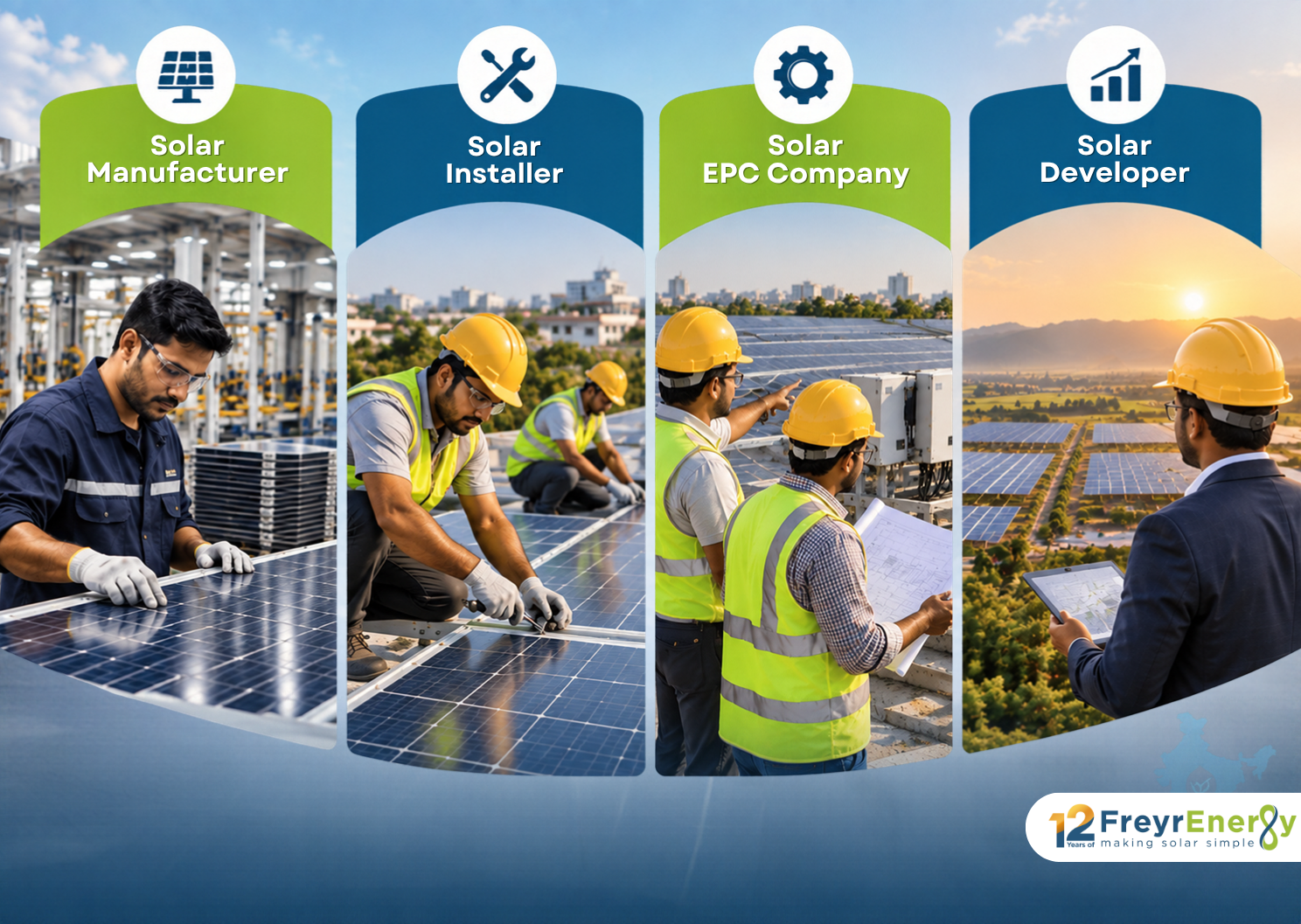
| Direct answer: A solar manufacturer makes modules or other components. An installer performs site work and connects the system. An EPC company manages engineering, procurement and construction under an agreed scope. A developer originates, finances and may own the project. An O&M provider operates and maintains the completed plant. One company may perform several roles, but only the signed contract defines accountability. |
A company can sell you a solar panel without designing your system. Another can install equipment without manufacturing it. An EPC contractor may accept responsibility for engineering, procurement and construction, while a developer may finance and own the asset and sell electricity to you. These roles are related, but they are not interchangeable.
Understanding the difference helps you compare quotations correctly, identify the legal party responsible for defects and choose a delivery model suited to a home, factory, institution or utility project. Always read the actual scope and contract: a company name or label does not establish responsibility on its own.
Quick Takeaways
- Buying a well-known panel does not automatically include good system design or installation.
- “Turnkey” should mean a defined single-point scope, not unlimited responsibility for every site risk.
- Product, performance and workmanship warranties usually come from different parties.
- A homeowner typically needs an accountable rooftop provider; a factory may require a formal EPC scope and SLA.
- Under a RESCO or PPA model, the developer may own the plant while the customer buys electricity.
- O&M is a separate lifecycle responsibility unless it is expressly included in the EPC or installation contract.
The Solar Project Value Chain
| Role | Primary job | Usually does not prove |
| Component manufacturer | Produces modules, inverters, batteries, structures or protection equipment. | That it designed or installed the complete site system. |
| Distributor or dealer | Supplies equipment through a commercial channel. | Engineering quality, workmanship or local service ownership. |
| Installer | Mounts, wires, tests and connects equipment at the site under an agreed design. | Full engineering, procurement risk or long-term performance responsibility. |
| EPC contractor | Coordinates engineering, procurement and construction through testing and commissioning. | Ownership or long-term operation unless separately contracted. |
| Developer / RESCO | Originates, finances and may own the asset and sell power under a PPA. | That construction is self-performed; an EPC contractor may execute it. |
| O&M provider | Monitors, inspects, maintains and responds to operational faults. | Responsibility for original design or construction defects. |
What Does a Solar Manufacturer Do?
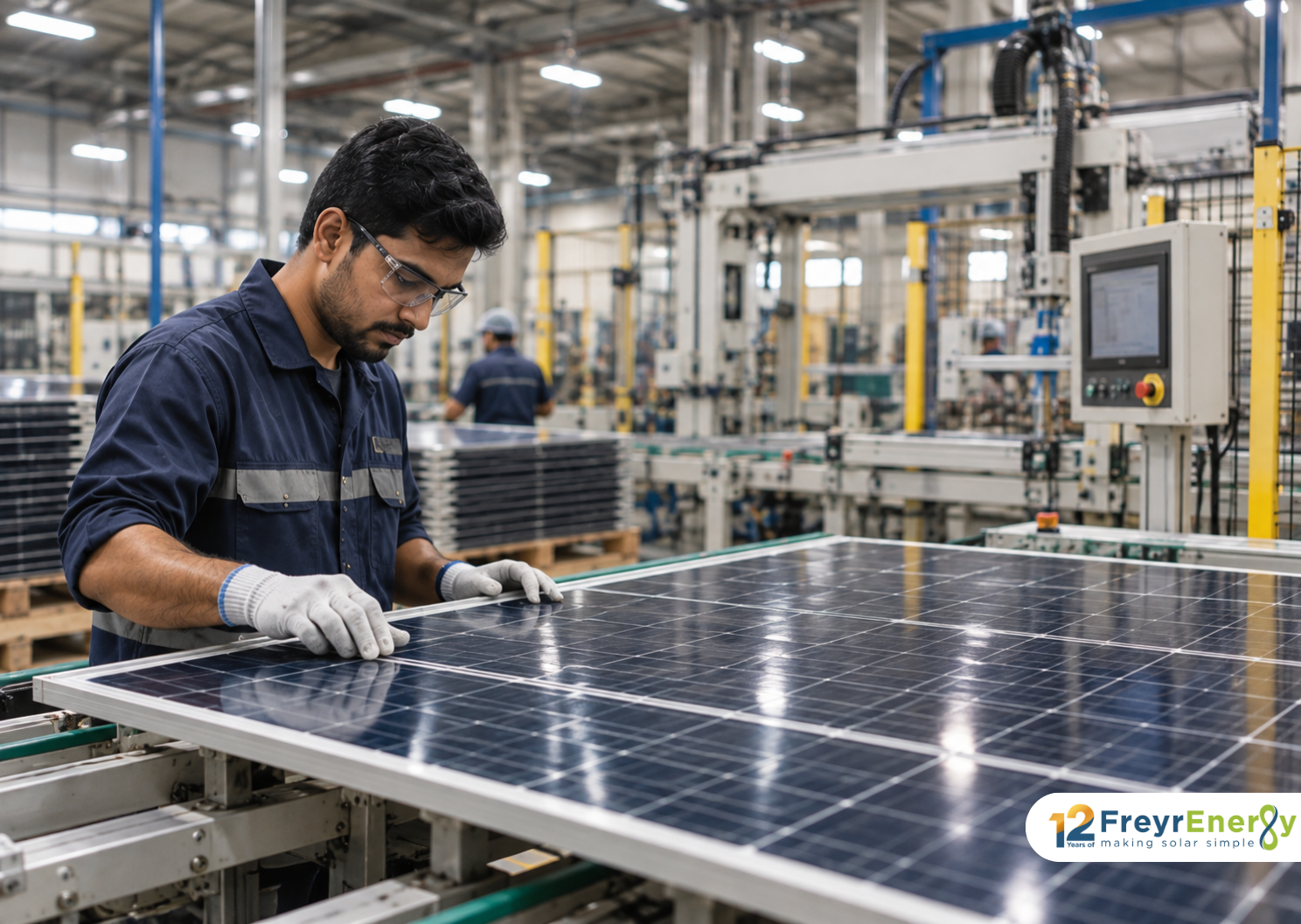
A manufacturer produces one or more system components. Module manufacturers control the declared model, bill of materials, factory quality processes, datasheet and applicable product and performance warranties. Inverter and battery manufacturers issue separate specifications and warranties for their equipment.
The manufacturer should be judged on the exact model, traceability, applicable BIS or ALMM status, technical documentation and claim process. Do not assume the panel brand is responsible for roof design, cable routing, earthing, waterproofing, subsidy paperwork or workmanship unless the same legal entity also contracts those services.
What Does a Solar Installer Do?
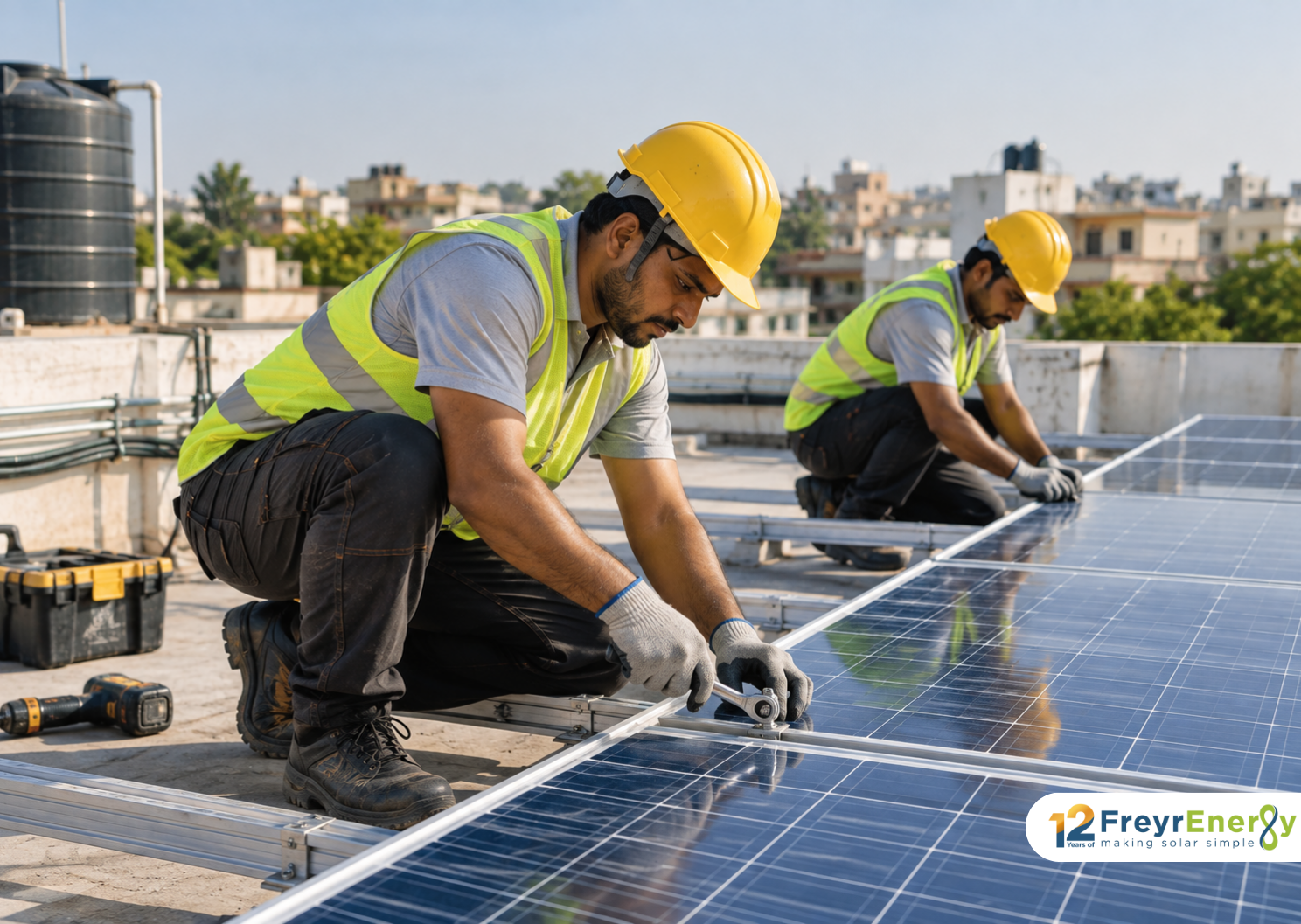
An installer performs on-site mechanical and electrical work. Depending on the business model, the solar installer may also survey, design, procure equipment, manage approvals and provide after-sales service. The label alone is therefore insufficient: compare the written scope.
For a home rooftop, the most important questions are who designed the layout, who checked shading and structure, who selected protection equipment, who files approvals, who commissions the plant and who returns if generation or roof integrity becomes a concern.
What Does a Solar EPC Company Do?
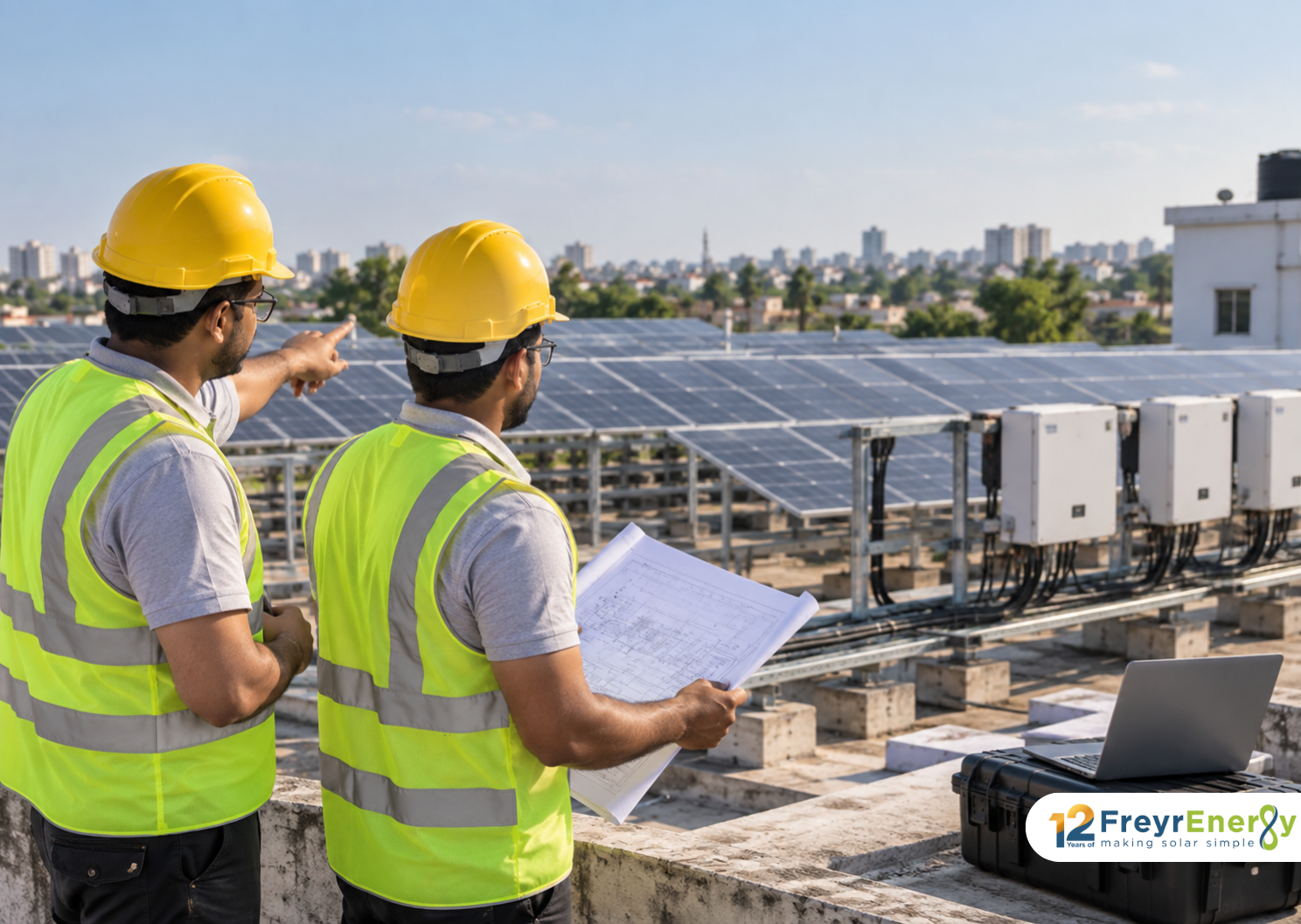
EPC means engineering, procurement and construction. A solar EPC contractor converts a defined project requirement into a commissioned plant by coordinating design, equipment sourcing, construction, testing, documentation and handover. O&M may be included, but it is not automatically part of every EPC contract.
| EPC stage | Typical responsibility | Evidence to request |
| Engineering | Survey, design basis, layout, electrical design, civil/structural work and energy model. | Approved drawings, calculations, loss assumptions and interface matrix. |
| Procurement | Specifications, vendor selection, purchasing, logistics, inspection and traceability. | Equipment schedule, approved makes, datasheets, serial records and inspection plan. |
| Construction | Site management, installation, quality control, safety, testing and commissioning. | Method statements, test reports, punch list and completion records. |
| Handover | As-built documents, manuals, training, warranties and acceptance evidence. | Complete handover index and signed acceptance criteria. |
A turnkey EPC route can reduce interface risk by placing a defined scope under one contract. It does not remove owner obligations, hidden-site conditions, approval dependencies or exclusions. Those boundaries must be documented.
What Does a Solar Developer or RESCO Do?
A developer identifies the opportunity, secures rights and approvals, arranges financing and may own the solar asset. Under a RESCO or power-purchase model, the customer may pay for electricity rather than buying the plant. The developer can appoint an EPC contractor and a separate O&M provider.
Compare the PPA term, tariff and escalation, minimum purchase obligations, roof or land access, metering, performance, insurance, lender rights, early termination, asset transfer and end-of-term removal. This is an ownership and energy-purchase decision, not merely an installation quotation.
Where Does O&M Fit?
Operations and maintenance begins after commissioning. Scope may include remote monitoring, preventive inspections, cleaning coordination, fault response, spares, vegetation control, reporting and warranty administration. For larger plants, define availability or performance KPIs, exclusions, measurement methods and response targets. For homes, identify the service channel, local escalation route and who coordinates OEM claims.
Solar Manufacturer vs Solar Installer vs Solar EPC vs Solar Developer
| Decision factor | Manufacturer | Installer | EPC contractor | Developer / RESCO |
| Makes equipment | Yes, for its products | Usually no | Usually procures | Usually procures through EPC |
| Site engineering | Usually no | Varies | Core scope | Oversees or appoints |
| Construction | Usually no | Core site work | Core scope | Usually through EPC |
| Owns the plant | No | No | Normally no | Often under RESCO/PPA |
| Product warranty | Issues for its product | May coordinate | May coordinate | Manages within ownership model |
| Workmanship warranty | Only if contracted | Usually for own work | Usually within EPC terms | Flows through project contracts |
| Long-term O&M | Only if offered | May offer | Optional/separate | Usually arranges |
Which Model Fits Your Project?
| Project situation | Likely delivery route | Priority check |
| Subsidised home rooftop | Eligible end-to-end rooftop provider or installer active for the relevant DISCOM. | Portal eligibility, exact equipment, workmanship, approvals and local service. |
| Home hybrid or backup system | Design-led solar installer or integrated rooftop provider. | Protected loads, inverter/battery compatibility, usable kWh and safe isolation. |
| Commercial or industrial CAPEX rooftop | C&I EPC contractor, sometimes with separate O&M. | Structural safety, load match, shutdowns, guarantees, acceptance and SLA. |
| Commercial RESCO/PPA | Developer/RESCO appointing EPC and O&M partners. | Tariff, tenure, generation risk, access, termination and asset ownership. |
| Utility or large ground-mounted project | Developer/owner plus EPC, OEMs and O&M provider. | Land, evacuation, permits, schedule, security, performance and lifecycle contracts. |
| Panel-only purchase | Manufacturer or authorised distribution channel. | Authenticity, exact model, compatibility and warranty claimant. |
Who Handles Each Warranty or Problem?
| Issue | Likely primary party | Contract check |
| Module manufacturing defect | Module manufacturer; installer/EPC may coordinate. | Claim process, labour, freight, removal and reinstallation. |
| Inverter fault | Inverter manufacturer or authorised service route. | Replacement/repair terms, extension and local support. |
| Loose cable, poor termination or mounting defect | Installer or EPC contractor. | Workmanship duration, response time and exclusions. |
| Roof leakage linked to installation | Installer/EPC if covered by scope. | Waterproofing method, baseline condition and remedy. |
| Generation below estimate | Depends on whether any guarantee exists. | Weather adjustment, exclusions, measurement and remedy. |
| Routine cleaning or preventive maintenance | Owner or O&M provider as contracted. | Frequency, access, safety, water and consumables. |
How to Compare Two Solar Proposals
First normalise the proposals. Ask both bidders to quote the same capacity, operating objective, equipment class, structure assumptions, protection scope, approvals and O&M period. Then compare the following evidence:
- Legal contracting entity and a responsibility matrix for owner, OEM, installer, EPC and O&M parties.
- Exact module, inverter, battery and protection-device model numbers.
- Design basis, roof or land assumptions, annual-generation model and stated losses.
- Complete inclusions, exclusions, taxes, approval charges and payment milestones.
- Acceptance tests, commissioning documents and conditions for final payment.
- Separate product, performance, workmanship and O&M terms.
- Fault-response targets, escalation path, spare strategy and warranty-claim coordination.
Red Flags in Role and Responsibility
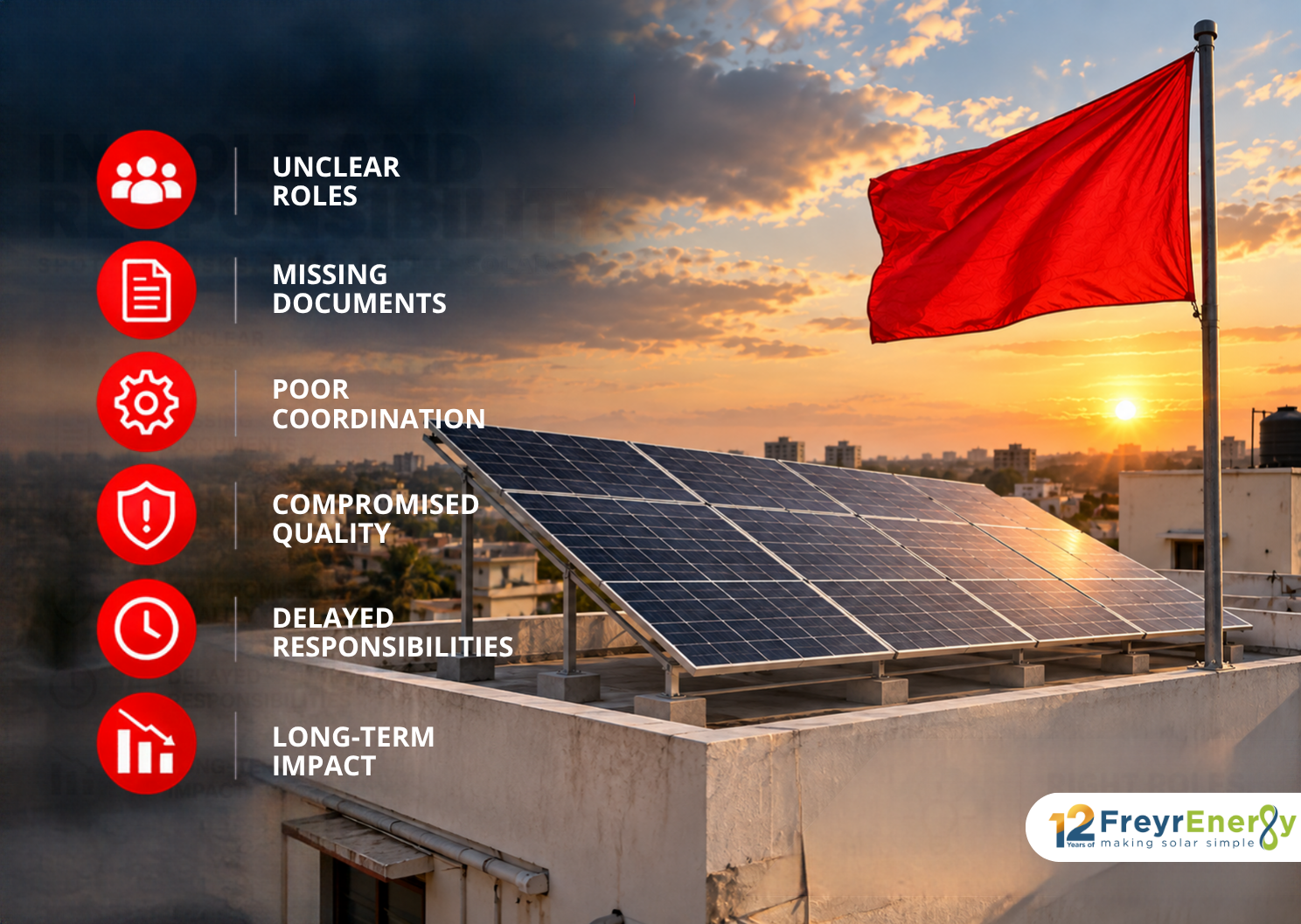
- The proposal uses “turnkey” but contains no detailed scope or responsibility matrix.
- The seller names a panel brand but omits the solar installer or legal contracting entity.
- One “25-year warranty” is presented as covering every component and workmanship issue.
- Annual generation is promised without weather data, losses, degradation or exclusions.
- O&M is described as included without tasks, visits, response targets or duration.
- The customer is told that government subsidy approval is guaranteed.
Where Freyr Energy Fits
Freyr Energy can be evaluated as an end-to-end rooftop provider for homes and businesses in its supported locations. Its verified public scope includes site assessment, customised design, installation support, financing and subsidy assistance, net-metering coordination, project tracking and system monitoring through the Freyr Energy Solar App. That places the customer journey closer to an integrated rooftop delivery model than a panel-only purchase.
The same discipline still applies: confirm the exact contracting entity, equipment, final design, inclusions, warranty documents, service route and current geographic availability in the signed proposal.
Conclusion
The most important distinction in solar is not the logo on the panel; it is the responsibility written into the contract. Manufacturers should be assessed on exact products, traceability and warranty support. Installers should be assessed on site execution and workmanship. EPC contractors should be assessed on integrated engineering, procurement, construction and acceptance. Developers should be assessed on finance, ownership and long-term energy obligations. O&M providers should be assessed on measurable operating scope and response.
Choose the project model first. Then shortlist companies that can prove they are qualified for that role, normalise their proposals and assign every design, approval, warranty and service obligation to a named party before signing.