
Direct answer: Hotels should consider solar when they have a stable daytime load, usable roof, canopy or land, and a tariff that makes self-consumed generation valuable. Feasibility should be based on at least 12 months of energy data, structural and fire-safety checks, a financial model and clear ownership of operation and maintenance. The financial model should separate energy savings, demand charges, diesel displacement, financing, O&M and any export value instead of promising one universal saving percentage.
Introduction
Hotels consume electricity across guest rooms, kitchens, laundry, lighting, HVAC, pumps and event spaces, often over long operating hours. That makes solar attractive, but the feasibility depends on when power is used and where panels can be placed. This guide shows hotel owners and finance teams how to evaluate rooftops, parking canopies, self-consumption, system size, CAPEX and RESCO models, safety, business disruption, sustainability claims and project risks.
Quick Takeaways
- Hotel daytime demand can align well with solar generation.
- Self-consumption usually matters more than assumed export revenue.
- Roofs, parking canopies and land can all be evaluated.
- CAPEX and RESCO allocate cost, risk and ownership differently.
- Safety, waterproofing, guest operations and honest ESG claims belong in the plan.
Hotel solar feasibility snapshot
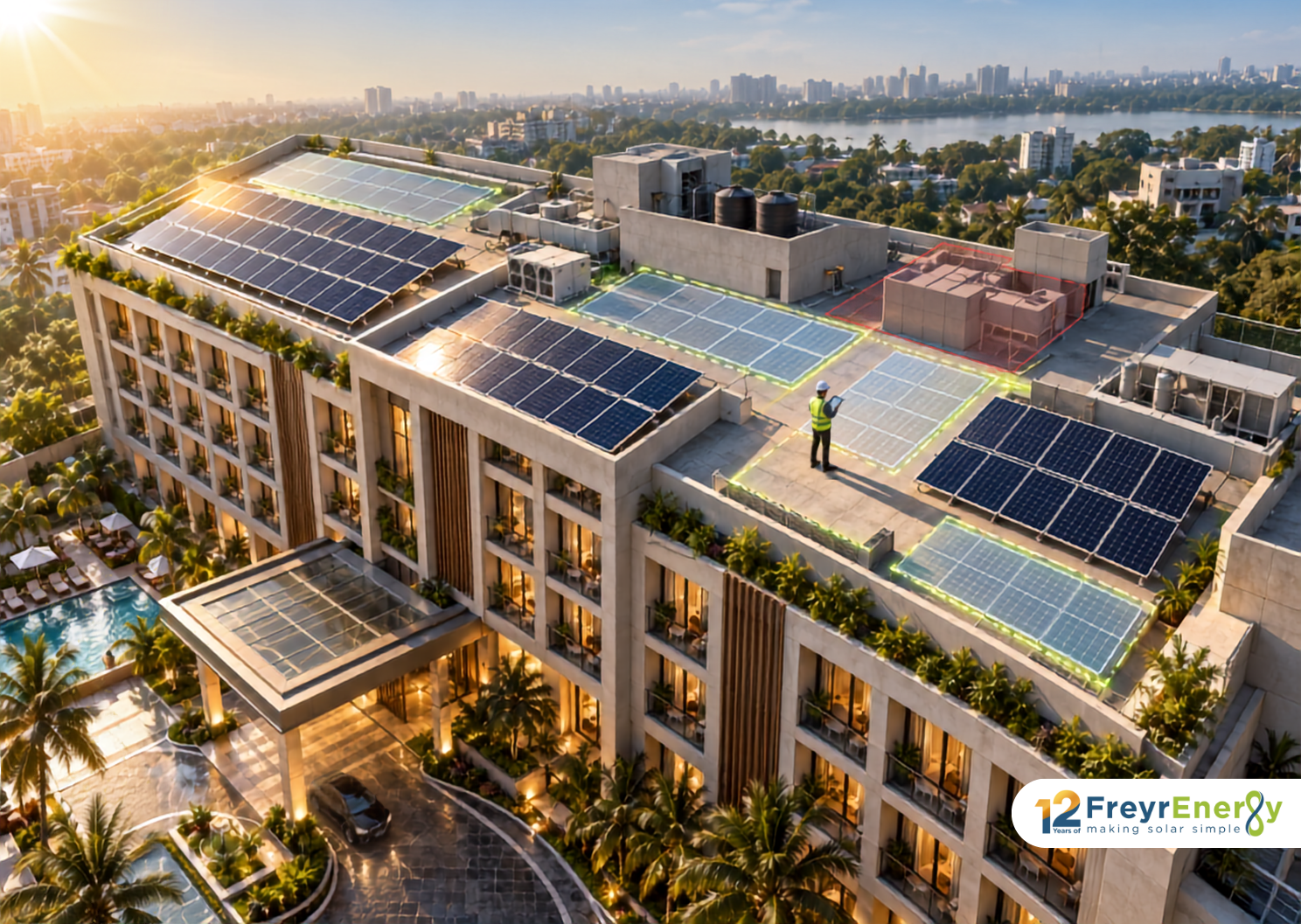
Feasibility input | Hotel question | Output |
|---|---|---|
Interval/monthly bills | When is demand highest? | Self-consumption estimate |
Usable area | Roof, canopy or land? | Capacity range |
Roof/structure | Can it take the loads? | Strengthening scope |
Commercial model | CAPEX or RESCO? | Cash flow and risk |
Operations | How will work avoid guests? | Execution plan |
Installing solar panels for hotels can help reduce grid-electricity consumption, manage long-term energy expenses and support sustainability goals. Here are five practical reasons hotels should consider solar energy.
1. Lower Electricity Costs
A rooftop solar system generates electricity that can be used within the hotel, reducing the number of units purchased from the grid.
Actual savings depend on:
- Available roof or open space
- Solar-system capacity
- Daytime electricity consumption
- Local electricity tariffs
- Solar generation
- Net-metering or net-billing rules
- Solar financing and maintenance costs
Hotels should obtain a site-specific savings estimate rather than rely on a fixed percentage reduction.
2. Make Better Use of Daytime Energy Consumption
Hotels often have substantial daytime loads from air conditioning, kitchens, laundry facilities, water pumps, common areas and administrative operations.
Solar generation typically occurs during the same period, allowing the hotel to consume more of the electricity directly. Surplus electricity may also be exported under the applicable metering arrangement.
A professional solar power plant design can match the system capacity to the hotel’s consumption pattern and available installation area.
3. Reduce Environmental Impact
Solar panels generate electricity without burning fuel at the installation site. Replacing part of the hotel’s grid-electricity consumption with solar can reduce the emissions associated with its operations.
Hotels may use verified solar-generation data in sustainability reporting and guest communications. Environmental claims should be based on measured performance rather than general assumptions.
4. Strengthen Brand Positioning
Many corporate clients, event organisers and travellers consider environmental practices when selecting accommodation.
A visible and well-documented solar project can support a hotel’s sustainability positioning. However, hotels should avoid vague claims such as “100% green” unless their complete energy use and environmental performance support them.
Solar monitoring can help the hotel communicate measurable information, such as electricity generated and grid consumption reduced.
5. Create Long-Term Operational Value
Commercial solar systems can operate for many years when they are properly designed and maintained. After the initial investment, the system continues generating electricity with relatively low routine operating requirements.
Reduced grid-electricity purchases may allow hotels to redirect funds towards:
- Property improvements
- Guest amenities
- Marketing
- Staff development
- Technology upgrades
- Business expansion
The actual return on investment depends on system price, generation, electricity tariffs, financing and maintenance. Hotels should review a detailed financial model before investing in solar energy.
Where Can Hotels Install Solar Panels?
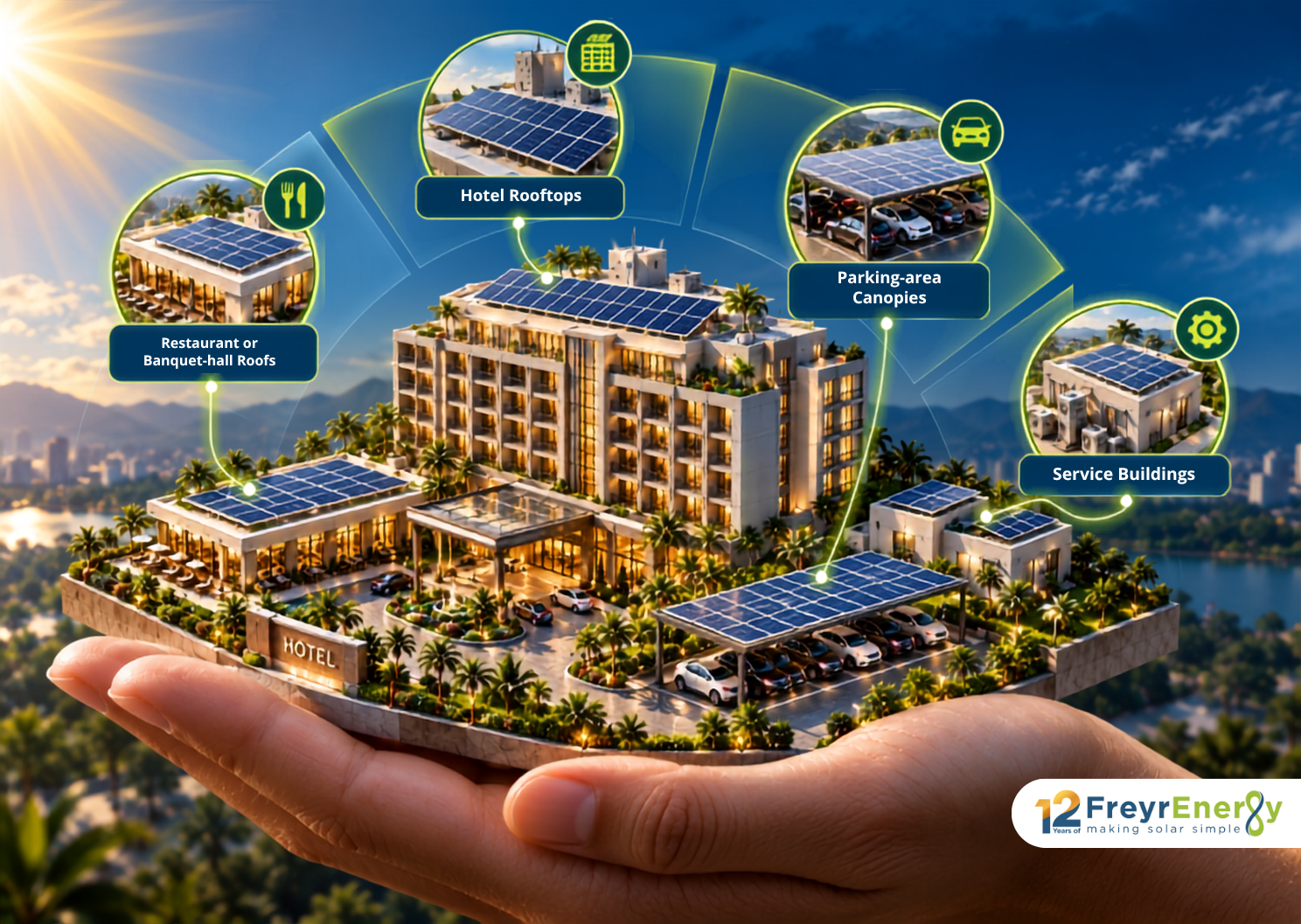
Depending on the property, solar panels may be installed on:
- Hotel rooftops
- Restaurant or banquet-hall roofs
- Parking-area canopies
- Service buildings
- Available ground-mounted areas
The site should be checked for structural strength, shading, usable space, electrical connectivity and local approvals.
Does Hotel Solar Work During Power Cuts?
A standard on-grid solar system normally shuts down during a grid outage for safety. It does not automatically provide uninterrupted power.
Hotels requiring backup should assess a compatible hybrid system, battery storage or integration with existing backup equipment. The final design must account for critical loads, safety requirements and local grid regulations.
What Should Hotels Check Before Installing Solar?
Before selecting a system, hotel owners should review:
- Historical electricity bills and load patterns
- Available shadow-free installation area
- Roof condition and structural capacity
- Proposed solar capacity and expected generation
- Equipment specifications and warranties
- Net-metering or net-billing regulations
- Fire and electrical-safety requirements
- Installation timeline and operational disruption
- Financing options
- Monitoring and maintenance support
Comparing itemised quotations based on the same technical scope makes it easier to evaluate installers fairly.
Build the Business Case From the Hotel Load Profile
Collect at least 12 months of interval or monthly electricity data and separate guest-room cooling, common-area HVAC, kitchens, laundry, pumps, hot-water systems, lifts, lighting, EV charging and tenant loads. Solar value is strongest when generation coincides with consumption. Seasonal occupancy matters: a beach resort, business hotel and wedding venue can have very different daytime profiles even at the same annual consumption.
Project input | Evidence to collect | Decision it informs |
|---|---|---|
Electricity demand | Bills, interval data, diesel use and operating schedules | System size and self-consumption |
Available area | Roof drawings, parking layout, setbacks and shade survey | Rooftop, canopy or ground-mount capacity |
Building condition | Structural report, waterproofing history and planned works | Reinforcement, phasing and roof-access risk |
Commercial terms | Tariff, demand charges, CAPEX/RESCO proposals and financing | Savings, cash flow and risk allocation |
Operations | Peak season, events, guest access and maintenance windows | Installation sequence and disruption controls |
CAPEX vs RESCO for a Hotel
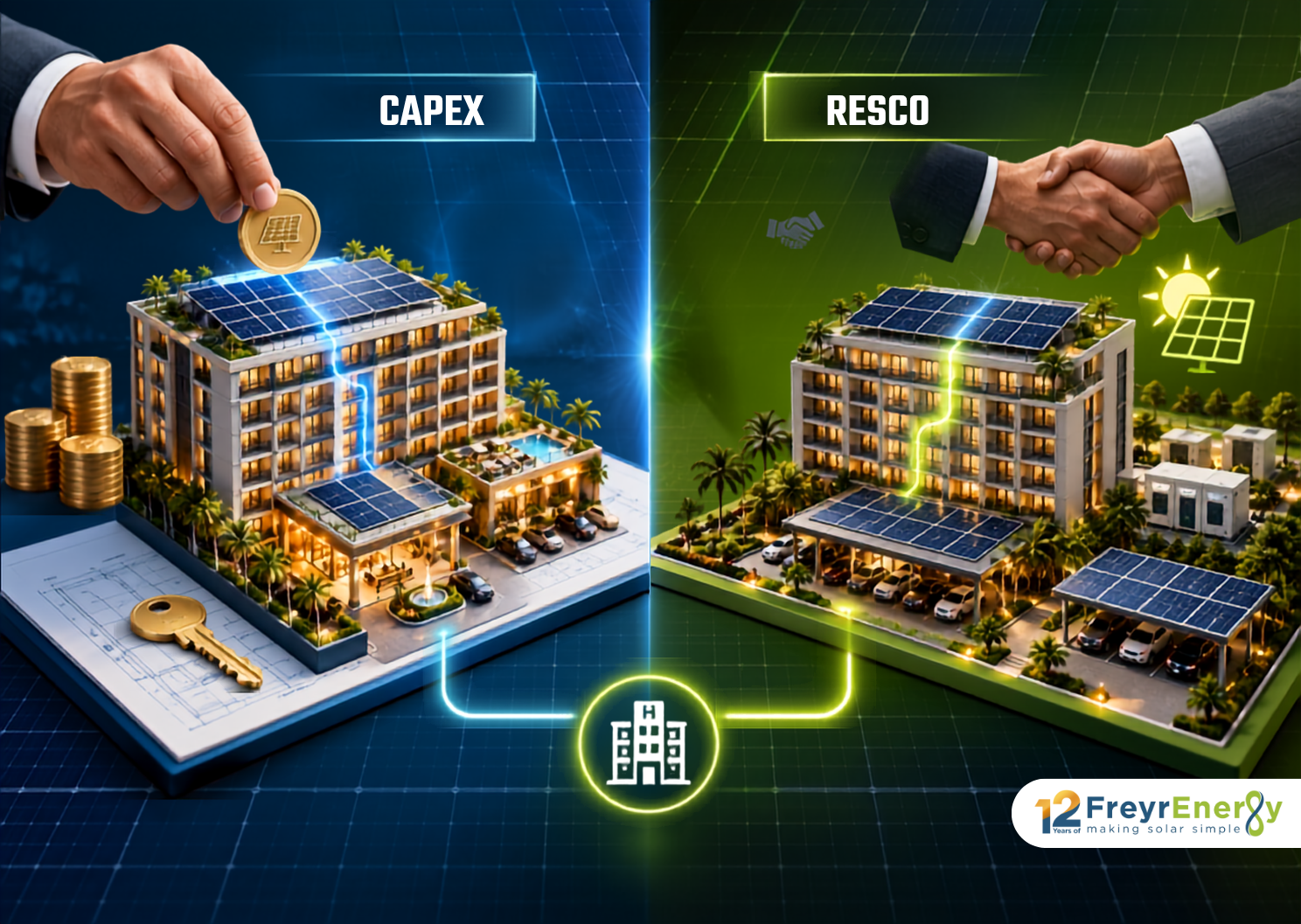
Under CAPEX, the hotel funds and generally owns the system, retains the energy value and carries more performance and maintenance responsibility. Under a RESCO or PPA, a third party generally owns the asset and the hotel purchases solar electricity under a long-term contract. Compare tariff escalation, minimum offtake, deemed generation, roof-access rights, performance remedies, insurance, property sale or redevelopment, early termination and end-of-term transfer. A lower first-year tariff is not enough to judge a long contract.
Engineering and Guest-Safety Considerations
- Maintain fire-fighting and service access; do not block smoke vents, drainage paths or rooftop equipment.
- Coordinate waterproofing and structural work before modules are installed, with written responsibility for future removal and reinstatement.
- Separate guest areas from lifting, scaffolding, hot work and electrical isolation zones during construction.
- Check wind loads for elevated structures and canopies, corrosion exposure, cable routes and lightning protection.
- Integrate monitoring with facilities management and define who responds to alarms, low output and inverter trips.
- Keep measured generation records before publishing sustainability or carbon claims.
Illustrative Hotel Use Case
A city hotel with high daytime HVAC, kitchen and laundry demand may self-consume most rooftop generation and require little export. A seasonal resort with low off-season occupancy may export more and should model the applicable settlement rules conservatively. Neither should size the system from roof area alone; the electrical demand and the commercial value of surplus decide whether the maximum physical capacity is economical.
Hotel Solar Savings Formula
Annual solar value: Self-consumed solar units × avoided energy tariff + credited exported units − O&M, insurance and other recurring project costs.
Hotels with demand charges should model whether solar changes billed demand; a rooftop plant that reduces midday energy may not reduce an evening or early-morning demand peak. The feasibility model should also distinguish electricity savings from avoided diesel use because standard grid-tied solar normally shuts down with the grid.
Procurement Questions for Hotel Owners
- Will the installation be phased around occupancy, events and kitchen or laundry operations?
- Who is responsible for roof leakage, guest or worker safety and damage to existing rooftop services?
- How are performance shortfalls, downtime and inverter replacement treated?
- Can the plant be expanded when another wing, chiller or EV fleet is added?
- Who owns renewable attributes and approves public sustainability claims?
- What happens if the hotel is sold, rebranded, refinanced or redeveloped?
Measure Performance After Commissioning
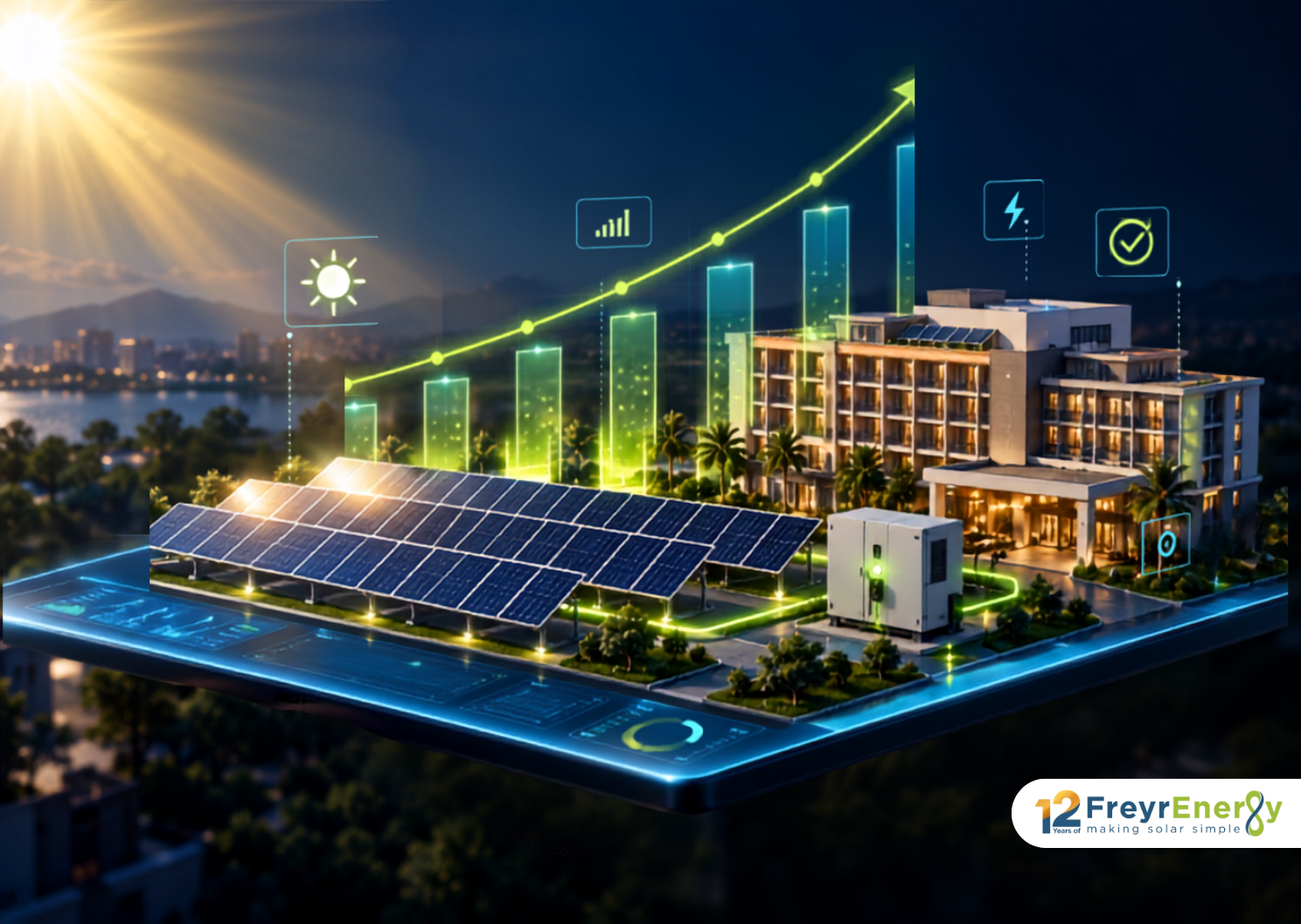
Track monthly generation, specific yield, inverter availability, self-consumption and export alongside occupancy and weather. Investigate deviations using clean reference periods rather than a single day. Finance and sustainability teams should use the same measured dataset so claimed savings and avoided emissions can be reconciled.
Hotel Load-to-Solar Matching Table
Hotel load | Typical timing | Solar-fit question |
|---|---|---|
Chillers and air conditioning | Day and evening; seasonal | How much demand coincides with solar hours? |
Kitchen and refrigeration | Meal periods and continuous refrigeration | Which loads are truly behind the proposed meter? |
Laundry | Schedulable daytime batches | Can operation shift toward midday without affecting service? |
Hot-water plant | Morning/evening peak with daytime recovery | Would solar thermal, PV or a combined approach fit better? |
Pumps and treatment | Often schedulable but operationally critical | Can tanks provide time flexibility? |
Guest rooms and events | Occupancy- and event-dependent | How does seasonality affect self-consumption? |
CAPEX vs RESCO Contract Comparison
Decision area | CAPEX hotel-owned system | RESCO/PPA system |
|---|---|---|
Upfront capital | Hotel or lender funds project | Developer generally funds project |
Energy benefit | Hotel retains avoided-cost value | Hotel buys solar units at contracted tariff |
O&M risk | Allocated through EPC/O&M contracts | Usually developer responsibility, subject to remedies |
Roof access | Controlled by hotel | Long-term licence/access rights required |
Performance risk | Primarily owner, warranty and O&M structure | Allocated through availability and deemed-generation clauses |
Exit/redevelopment | Owner manages relocation/removal | Termination, buyout and restoration formula is critical |
Hotel-Specific Financial Model
Model monthly solar output against occupancy and the actual utility tariff. Separate energy charges, demand charges and diesel costs. Include roof or canopy works, shutdown windows, insurance, O&M, inverter replacement, finance and taxes. Under a PPA, model tariff escalation, minimum offtake, deemed generation, change in law and early termination. Present a downside case for lower occupancy or delayed commissioning.
Operational Use Cases
- Business hotel: steady daytime HVAC, kitchen and office loads can support high self-consumption.
- Resort: seasonal occupancy may create low-season export; model settlement conservatively.
- Wedding hotel: event peaks may occur after sunset, so PV alone may not reduce maximum demand.
- Airport hotel: 24-hour loads can absorb daytime solar, but backup and life-safety circuits remain separate.
- Heritage property: roof constraints may make parking canopies or off-site procurement more practical.
Conclusion
Solar can reduce a hotel’s purchased electricity and support credible sustainability goals, but the project should pass the same scrutiny as any capital or long-term supply contract. Use measured load data, complete site assessment and downside financial cases. Decide who owns generation risk, maintenance, roof access and end-of-term obligations. Publish environmental claims only from measured output and a disclosed method. A disciplined feasibility study produces a better result than a generic promise of percentage savings.