
Direct answer: Switching to solar can lower grid purchases, improve long-term energy-cost visibility and support cleaner electricity when the site, consumption and system type are suitable. It may not be the right immediate investment for a shaded, weak or soon-to-be-replaced roof, very low consumption, uncertain property tenure or an uneconomic export arrangement. A strong decision uses conservative generation and tariff assumptions and may reasonably conclude “not yet” when the roof, property rights or economics are unsuitable.
Introduction
Solar offers compelling benefits, but a responsible decision begins with the user’s goal. A household seeking lower bills may need an on-grid system; a clinic needing outage resilience may need storage; a shaded or soon-to-be-renovated roof may need no solar yet. This guide explains the financial, operational and environmental reasons to switch, the limitations, suitable use cases and a decision checklist that helps readers avoid one-sided promises.
Quick Takeaways
- Solar can reduce grid purchases but not every bill line.
- On-grid solar does not normally provide outage backup.
- Roof, consumption, tenure and export rules shape economics.
- Efficiency improvements can reduce the required system size.
- A balanced decision includes reasons to delay or decline solar.
Is your property ready for solar?
Goal | Suitable path | Key limitation |
|---|---|---|
Reduce bills | On-grid solar | No normal outage backup |
Backup essential | Hybrid with selected loads | Battery cost and ageing |
No reliable grid | Off-grid design | Energy discipline and storage |
Roof unsuitable | Efficiency first or alternate site | Delay may be best |
India receives abundant sunlight across much of the country, making rooftop solar a practical option for many properties. Here are four important reasons to consider making the switch.
1. Lower Electricity Bills
Solar panels generate electricity that can be used directly by your home or business. This reduces the number of electricity units purchased from the grid.
With an approved net-metering arrangement, eligible surplus electricity may also be exported to the grid and adjusted according to local DISCOM regulations.
Actual savings depend on:
- Electricity consumption
- Solar-system capacity
- Daytime energy use
- Local electricity tariffs
- Solar generation
- Applicable metering rules
Eligible residential installations may also qualify for a solar subsidy in India, subject to current scheme conditions and DISCOM verification.
2. Reduced Environmental Impact
Solar panels generate electricity without producing air pollution or greenhouse-gas emissions during operation. Using solar power can therefore reduce a property’s dependence on electricity generated from fossil fuels.
The actual reduction in carbon emissions varies according to solar generation and the electricity sources being replaced. Even so, adopting rooftop solar is a practical step towards cleaner energy consumption and long-term sustainability.
Learn more about the environmental benefits of solar energy.
3. Relatively Low Maintenance
Solar photovoltaic systems have few moving parts and generally require limited routine maintenance. Regular care typically includes:
- Cleaning dust and debris from the panels
- Monitoring electricity generation
- Inspecting cables and electrical connections
- Checking the inverter and mounting structure
- Arranging periodic professional inspections
Cleaning frequency depends on local dust, pollution, rainfall and surrounding conditions. Proper solar-panel maintenance can help the system deliver reliable performance over its operating life.
4. Productive Use of Rooftop Space
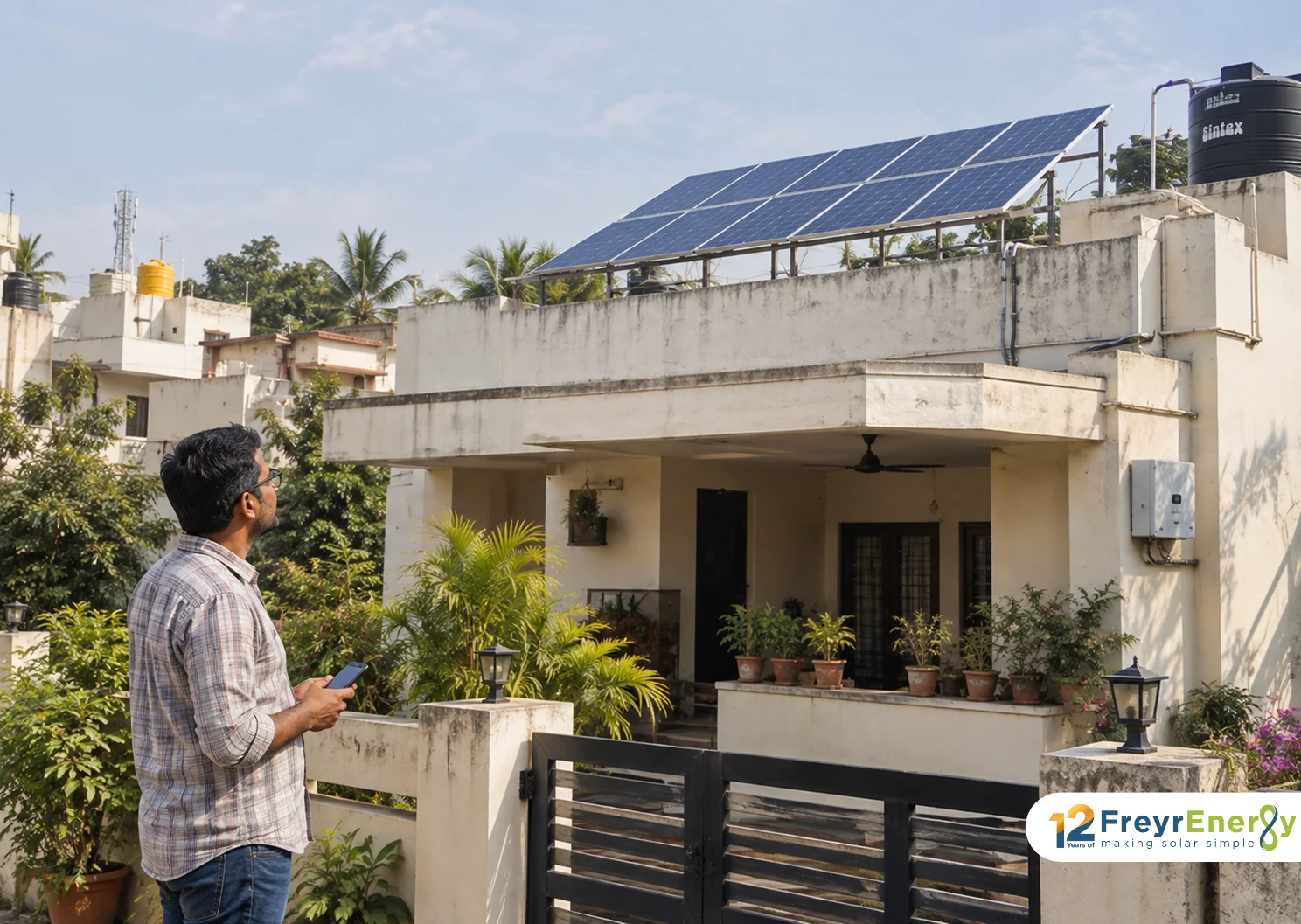
Solar panels can convert an unused section of your roof into an electricity-generating asset. This is particularly useful in urban areas where open land is limited.
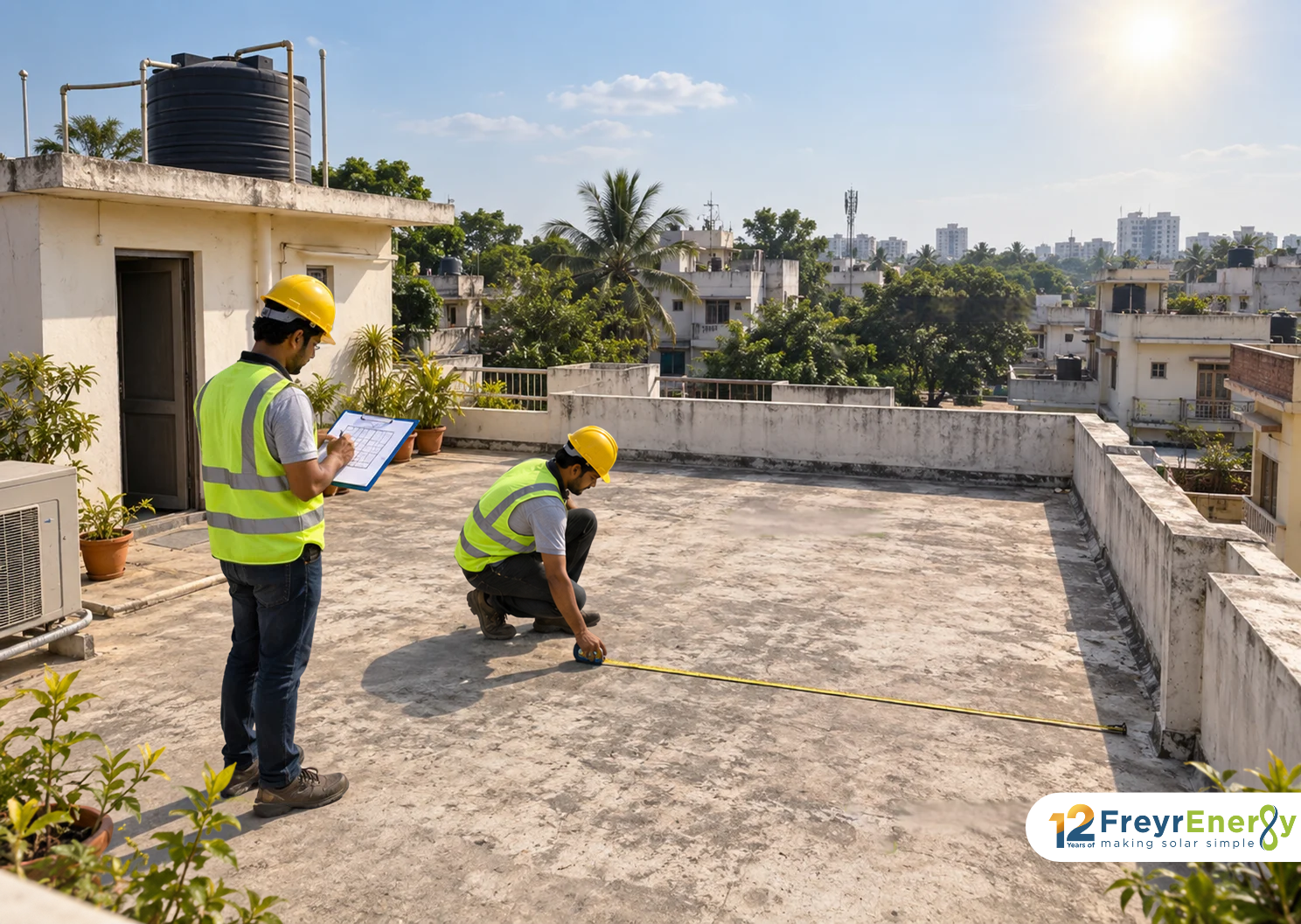
The space required depends on panel dimensions, system capacity, roof layout, shading and maintenance access. Before installation, a professional site survey should evaluate:
- Available shadow-free area
- Roof condition and structural strength
- Panel orientation and tilt
- Water tanks and other obstructions
- Safe access for cleaning and repairs
Review these factors to consider before buying rooftop solar panels before selecting a system.
Is Solar Right for Your Property?
Solar may be a suitable option if your property receives adequate sunlight, has sufficient installation space and consumes a meaningful amount of electricity during the day.
The system should be sized according to your electricity bills, roof conditions and future requirements. Avoid relying on guaranteed savings or returns without a site-specific assessment.
Freyr Energy provides customised solar solutions for homes and businesses. The Freyr Energy App also helps customers access quotations, follow project progress and monitor their solar systems.
When Solar Is Usually a Strong Fit
Condition | Why it supports solar | Evidence to check |
|---|---|---|
Meaningful annual electricity use | Creates units that solar can offset | Twelve months of bills |
Daytime consumption or fair export treatment | Improves the value of generation | Load profile and current DISCOM rules |
Sound, usable roof or suitable land | Supports safe long-term installation | Survey, shade study and structural review |
Stable property rights | Reduces relocation and access risk | Ownership, lease, society and lender permissions |
Ability to fund or finance responsibly | Keeps project cash flow manageable | Gross price, subsidy timing, loan APR and fees |
When to Delay or Reject an Installation
- The roof needs replacement, waterproofing or structural repair in the near term.
- Most usable area is shaded and no safe alternative location exists.
- The property may be sold, demolished or substantially redeveloped before the investment can be recovered.
- Consumption is very low and efficiency upgrades are more economical than an oversized system.
- The proposal depends on an unverified subsidy, export credit or electricity-price escalation.
- The installer will not identify equipment, safety scope, exclusions, warranties or service responsibility.
Choose the System Type Separately From the Decision to Go Solar
A positive solar decision does not automatically justify batteries. On-grid solar is usually the starting point for bill reduction with a reliable grid. Hybrid solar is appropriate when selected loads need backup and the user accepts storage cost and replacement planning. Off-grid solar is designed around autonomy where the grid is absent or unusable. Compare these architectures using the same load data and clearly defined objective.
Use Conservative Economics
Annual value: Self-consumed solar units × avoided import tariff + exported units × applicable export credit − recurring solar costs.
Calculate net investment from the gross installed price, confirmed assistance and financing cost. Include degradation, downtime, maintenance, insurance and likely major replacements. Simple payback is useful for screening but does not capture cash-flow timing. A decision that works only under the most optimistic generation, tariff and subsidy assumptions is not robust.
Environmental Benefits Need a Method
Rooftop solar can reduce electricity drawn from the grid and support decarbonisation, but an emissions claim should state the generation period, grid-emissions factor and whether renewable attributes are retained. Avoid translating panel capacity directly into an annual carbon figure without measured or modelled generation. At end of life, plan for responsible handling of modules, inverters and batteries through applicable channels.
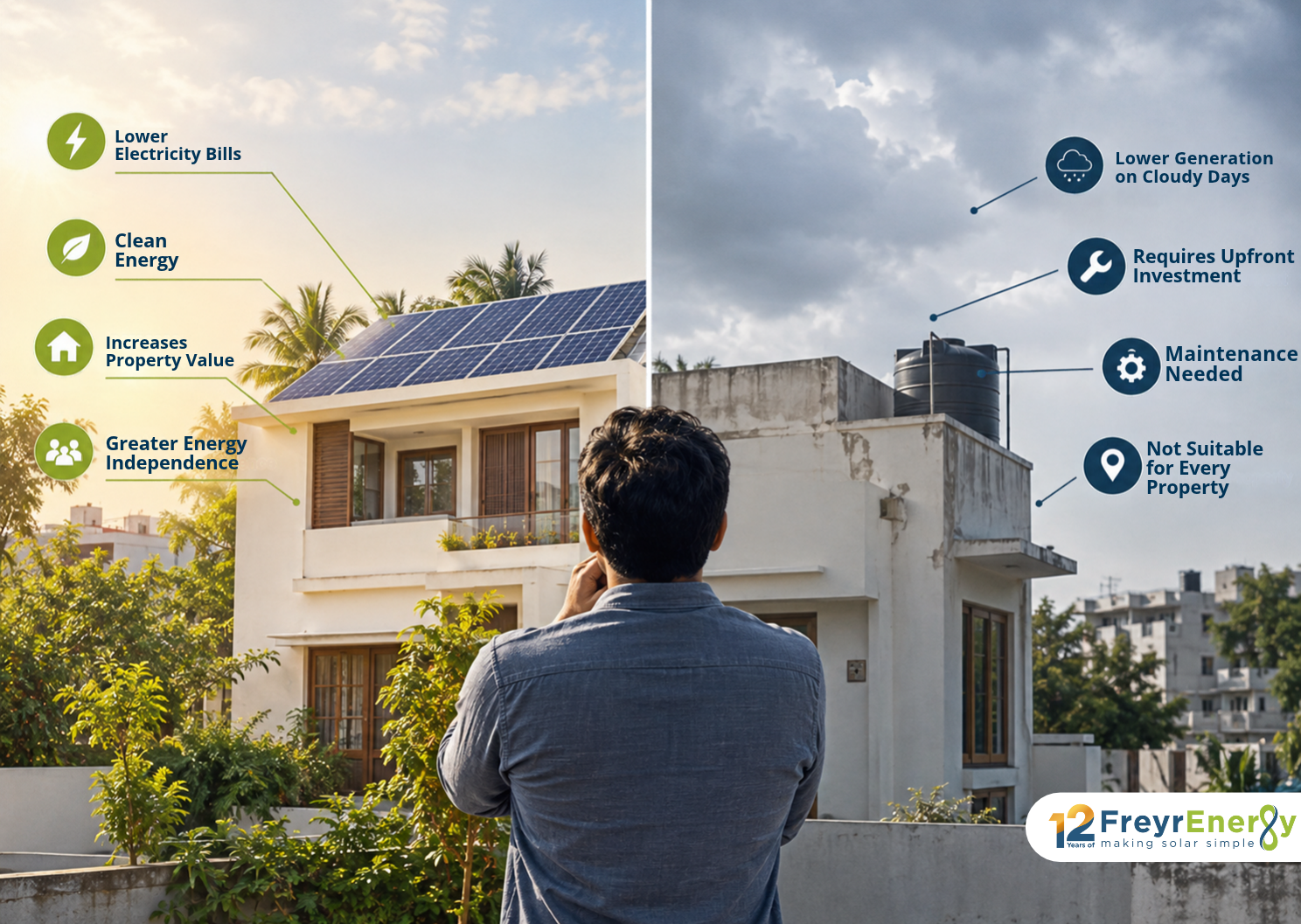
Benefits and Limitations Side by Side
Potential benefit | Corresponding limitation |
|---|---|
Lower grid-energy purchases | Generation varies and fixed charges may remain |
Long service life with low routine fuel cost | Upfront investment and component replacement still matter |
Useful daytime generation | Normal on-grid solar does not supply an outage |
Government assistance for eligible homes | Approval, equipment and process conditions apply |
Cleaner electricity contribution | Environmental claims need generation and grid-factor evidence |
Productive roof use | Roof access, waterproofing and future repairs must be planned |
Three Decision Scenarios
- High-use owned home with a sound unshaded roof: on-grid solar may offer a strong bill-reduction case after site and tariff validation.
- Clinic with frequent outages: solar can help, but critical-load resilience requires a hybrid, UPS, generator or coordinated backup design.
- Low-use rented home with a roof due for repair: efficiency measures and a later installation may be the better sequence.
What a Good Final Decision Looks Like
The system capacity is tied to bills and usable area; the architecture matches the outage requirement; equipment and safety are specified; approvals and subsidy are qualified; and the financial case survives conservative generation and tariff assumptions. The owner also understands maintenance, monitoring, roof access, warranty claims and end-of-life responsibility.
Solar Go/Wait/No Decision Matrix
Condition | Go now | Wait and fix first | Likely no/alternative |
|---|---|---|---|
Roof | Sound, clear and long remaining life | Repair, waterproof or obtain structural review | Persistently shaded/unsafe with no alternative site |
Consumption | Meaningful annual/daytime use | Measure bills and improve efficiency | Very low use with weak export value |
Property rights | Stable ownership and approvals | Obtain society/landlord/lender consent | Short uncertain tenure |
Grid/backup need | Architecture matches need | Define critical loads and outage duration | Expectation cannot be met within budget |
Economics | Conservative case is acceptable | Clarify tariff, scope or financing | Depends on guaranteed subsidy/zero bill |
Benefits and Limitations by Objective
Objective | How solar helps | What it does not automatically solve |
|---|---|---|
Lower bills | Replaces eligible grid purchases and may earn export credit | Fixed charges, poor sizing or night use |
Backup | Hybrid/off-grid can support selected loads | Unlimited whole-home power during long outages |
Price certainty | Upfront asset can reduce exposure to future energy charges | Maintenance, finance and policy uncertainty |
Sustainability | Produces renewable electricity at the site | Unmeasured carbon claims or end-of-life responsibility |
Property value/use | Can make productive use of roof | Roof repair, access and buyer-transfer issues |
Three Financial Scenarios
Build conservative, base and upside cases. Vary generation, self-consumption, export credit, tariff escalation, downtime, maintenance and major replacement. Keep subsidy and vendor discount separate. If the project only works in the upside case, reduce capacity, improve the roof/load fit or delay the purchase.
Questions Seen Across Top Results
- Will solar eliminate my bill? Usually not completely because charges and unmatched use remain.
- Does it work during a power cut? Standard on-grid solar normally does not.
- How long is payback? It is site-specific and should be calculated from transparent cash flows.
- Do panels need maintenance? Yes, monitoring, safe cleaning and periodic inspection matter.
- Should I add batteries? Only after valuing the required resilience and lifecycle cost.
Conclusion
Solar is a strong option when it matches the property, load and goal. It is not a substitute for roof repair, energy efficiency or realistic backup planning. Compare on-grid, hybrid and no-installation-yet scenarios, verify subsidy and export treatment, and model savings with transparent assumptions. A balanced decision can still favour solar, but it does so for measurable reasons. That honesty improves customer trust and reduces the risk of disappointment after commissioning.