
Heating water is one of the biggest contributors to household electricity consumption, especially during the winter months.
A solar water heater offers a simple way to meet your daily hot water needs by using sunlight instead of electricity, helping reduce energy bills while making your home more energy-efficient.
Today, solar water heaters in India are available in different capacities and designs to suit homes, apartments, institutions, and commercial buildings.
Whether you’re replacing an electric geyser or planning a new installation, understanding how these systems work and what to expect can help you make an informed decision.
Let’s understand how a solar water heater works, the different types available, their benefits, costs, and the factors to consider before choosing one.
Quick Takeaways
- A solar water heater uses sunlight instead of electricity to heat water, helping reduce electricity consumption.
- Most systems have a lifespan of 15–20 years with proper maintenance.
- The two main collector types are Flat Plate Collectors (FPC) and Evacuated Tube Collectors (ETC).
- Solar water heaters generally have higher upfront costs but much lower operating costs than electric geysers.
- Choosing the correct capacity depends on your household’s daily hot water requirement.
- Proper installation, adequate sunlight, and regular maintenance are essential for optimum performance.
What Is a Solar Water Heater?
A solar water heater is a system that uses sunlight to heat water for everyday use. Instead of relying on electricity or gas, it captures solar heat through collectors and stores the heated water in an insulated tank for later use.
A typical solar hot water system includes solar collectors, a storage tank, connecting pipes, and other components that work together to provide a reliable supply of hot water.
It is widely used in homes, apartments, hotels, hospitals, and commercial buildings to reduce electricity consumption and lower energy costs.
How Does a Solar Water Heater Work?
A solar water heater uses solar collectors to absorb heat from sunlight and transfer it to the water. The heated water is then stored in an insulated tank, ready for use whenever required.
In most systems, cold water flows through the rooftop collectors, where it is heated by the sun before moving into the storage tank. Some systems rely on natural circulation, while larger installations use pumps to circulate the water.
Many solar water heating systems also include an electric backup heater to ensure a continuous supply of hot water during extended cloudy weather or periods of high demand.
Types of Solar Water Heaters
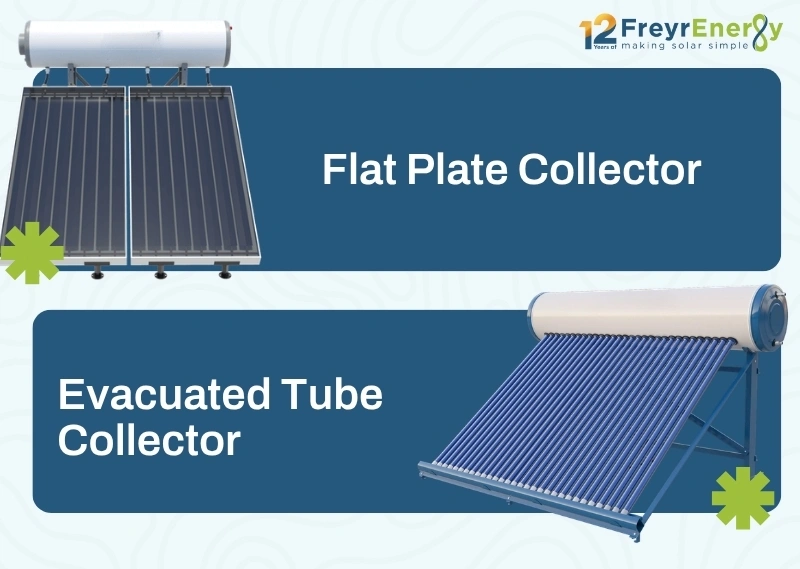
The two main types of solar water heaters used in India are Flat Plate Collectors (FPC) and Evacuated Tube Collectors (ETC). They differ in design, efficiency, durability, and cost.
Flat Plate Collector (FPC)
An FPC uses a heat-absorbing metal plate covered with glass to warm water. It is durable, performs well in areas with hard water, and typically requires less maintenance. However, it has a higher upfront cost.
Evacuated Tube Collector (ETC)
An ETC uses glass tubes to capture solar heat and transfer it to the water. It is more affordable, lightweight, and commonly used in home solar water heaters. However, the glass tubes may need replacement if damaged.
FPC vs ETC: Which Solar Water Heater Is Better?
| Feature | Flat Plate Collector (FPC) | Evacuated Tube Collector (ETC) |
| Initial Cost | Higher | Lower |
| Efficiency | High | High |
| Hard Water Resistance | Excellent | Moderate |
| Maintenance | Low | Moderate |
| Durability | Very High | Good |
| Weight | Heavy | Light |
| Best For | Hard water & long-term durability | Residential homes & budget-conscious buyers |
Which One Should You Choose?
Choose FPC if:
- Your area has hard water.
- You want a highly durable system.
- You are willing to invest more initially for long-term reliability.
Choose ETC if:
- You’re looking for a more affordable solution.
- Your household has normal water quality.
- You want a cost-effective system for residential use.
Benefits of Installing a Solar Water Heater
Installing a solar water heater offers more than just hot water. It can help reduce energy costs, lower dependence on conventional energy sources, and provide a reliable hot water supply for years.
Lower Electricity Bills
A solar water heater uses sunlight instead of electricity to heat water, reducing the need to run an electric geyser every day. This can lead to noticeable savings on monthly electricity bills, especially in households with high hot water usage.
Environment-Friendly
Since it runs on renewable solar energy, a solar water heater reduces electricity consumption and helps lower carbon emissions, making it a more sustainable choice.
Low Operating Costs
Once installed, the system requires very little energy to operate. Apart from periodic maintenance, there are no recurring fuel costs, making it economical over the long term.
Reliable Hot Water Supply
With a properly sized system and an insulated storage tank, you can enjoy a steady supply of hot water for bathing, cleaning, and other daily needs. Many systems also include an electric backup heater for use during extended cloudy weather.
Solar Water Heater vs Electric Geyser
Both a solar water heater and an electric geyser provide hot water, but they differ significantly in how they operate, running costs, and long-term value.
| Feature | Solar Water Heater | Electric Geyser |
| Energy Source | Sunlight | Electricity |
| Running Cost | Very low | High due to regular electricity consumption |
| Initial Cost | Higher | Lower |
| Electricity Savings | Significant | None |
| Hot Water Availability | Depends on sunlight, with backup available in many models | Available whenever electricity is available |
| Maintenance | Low, with periodic servicing | Low to moderate |
| Environmental Impact | Uses renewable energy | Depends entirely on grid electricity |
| Lifespan | 15–20+ years | Around 8–12 years |
For households that use hot water regularly, a solar water heater can be a more economical choice over the long term despite its higher upfront cost.
On the other hand, an electric geyser may be suitable for homes with occasional hot water needs or where installing a rooftop solar water heater isn’t feasible.
How Much Does a Solar Water Heater Cost in India?
Solar water heater cost depends on capacity (measured in Litres Per Day, or LPD), collector type, brand, and installation complexity. Here’s a realistic 2026 market range by capacity:
| Capacity | ETC System | FPC System |
| 100 LPD | ₹15,000 – ₹25,000 | ₹24,000 – ₹35,000 |
| 200 LPD | ₹22,000 – ₹33,000 | ₹30,000 – ₹55,000 |
| 300 LPD | ₹36,000 – ₹50,000 | ₹55,000 – ₹80,000 |
| 500 LPD (large homes/commercial) | ₹70,000 – ₹90,000 | ₹88,000 – ₹1,10,000+ |
Installation typically adds another ₹2,000–₹6,000, depending on roof access and plumbing complexity. Prices vary by roughly ±10–15% depending on brand, city, and promotional offers, so treat these as planning ranges — always get a site-specific quote before deciding.
Government subsidy for solar water heaters
Unlike rooftop solar panels (which qualify for the central PM Surya Ghar subsidy), solar water heaters currently don’t have a dedicated central government subsidy scheme. Some states and financial institutions have offered soft loans or rebates in the past, so it’s worth checking with your state renewable energy agency for anything currently active in your area
How to Choose the Right Solar Water Heater?
Selecting the right capacity is one of the most important decisions before purchasing a solar water heater.
A system that’s too small may not provide sufficient hot water, while an oversized system increases the initial investment without offering additional benefits.
Although a professional site assessment provides the most accurate recommendation, the following table serves as a useful starting point.
| Family Size | Recommended Capacity |
| 2–3 Members | 100 LPD |
| 4–5 Members | 200 LPD |
| 6–8 Members | 300 LPD |
| Large Families / Villas | 500 LPD and above |
Apart from the number of family members, your ideal capacity also depends on:
- Daily bathing habits
- Number of bathrooms
- Simultaneous hot water usage
- Climate conditions
- Future family requirements
Choosing the correct capacity helps ensure a reliable supply of hot water while avoiding unnecessary installation costs.
Installation Requirements
Proper solar water heater installation is essential for efficient heating and a steady hot water supply. Before installation, the site should be checked for the following requirements:
Adequate Roof Space
The roof should have enough space for the collectors and storage tank. It must also be strong enough to support the system’s weight when the tank is full.
Direct Sunlight
The collectors should receive direct sunlight for most of the day. Shade from trees, walls, or nearby buildings can reduce heating performance.
Suitable Orientation
The system should be positioned to receive maximum sunlight based on the property’s location and roof design. A professional installer can determine the most suitable direction and tilt.
Proper Plumbing Access
The installation area should have convenient access to the cold-water supply and hot-water pipelines. Long pipe runs can increase heat loss and installation costs.
Solar Water Heater Maintenance
Solar water heaters require relatively little maintenance, but regular servicing helps maintain efficiency and extend the system’s lifespan.
To keep your system performing well:
- Clean the solar collectors every few months to remove dust and dirt.
- Inspect pipes and valves periodically for leaks.
- Check the storage tank for signs of corrosion or insulation damage.
- Schedule professional servicing at least once a year.
- Replace damaged ETC glass tubes promptly if required.
With proper maintenance, a quality solar water heater can last 15–20 years or more.
Is a Solar Water Heater Worth It?
If your household uses hot water every day, a solar water heater can be a worthwhile investment. Although the initial cost is higher than an electric geyser, the lower electricity consumption and long service life can result in significant savings over time.
With the right system, proper installation, and regular maintenance, a solar water heater provides a reliable, energy-efficient, and environmentally friendly solution for meeting your daily hot water needs.
Conclusion
A solar water heater is an effective way to reduce electricity consumption while ensuring a dependable supply of hot water.
By understanding how these systems work, comparing the available types, evaluating the costs, and choosing the right capacity, you can make an informed decision that suits your home’s requirements.
Before making a purchase, compare different products, warranties, and installation requirements to choose a system that offers the best long-term value.