
Choosing the best type of solar panel is the first step toward making your home or business truly energy-independent. With electricity prices rising every year, more people in India are switching to solar systems that offer long-term savings, low maintenance, and clean, renewable power. Before investing, it’s important to understand the different types of solar panels, their solar panel efficiency, cost, and performance to make an informed decision.
Solar panels work by converting sunlight, made of tiny energy particles called photons, into usable electricity. They are widely used across India in solar panel installations in India, including homes, offices, schools, industries, and remote monitoring systems, providing reliable and sustainable power.
In this guide, we explore the kinds of solar panels, compare their solar panel efficiency, and help you choose the best type of solar panel for your energy needs.
Different Types of Solar Panels and Their Efficiency
In India, there are several types of PV panels available. They differ in manufacturing process, appearance, performance, cost, and installation suitability. The common types of solar panels include:
- Monocrystalline Solar Panels (Mono-SI)
- Polycrystalline Solar Panels (Poly-SI)
- Thin Film Solar Panel
- Bifacial Solar Panels
- TOPCon Solar Panel
Comparison Table: Types of Solar Panels in India
|
Type of Solar Panel |
Efficiency Range |
Cost |
Key Advantage |
|
Monocrystalline (Mono-SI) |
17–22% |
Higher |
High output, fewer panels needed |
|
Polycrystalline (Poly-SI) |
15–17% |
Medium |
Affordable and durable |
|
Thin Film |
Low |
Low |
Lightweight, easy installation |
|
Bifacial |
Higher than Mono |
Higher |
Power generation from both sides |
|
TOPCon |
23–24%+ |
High |
Advanced tech with best performance |
1. Monocrystalline Solar Panels (Mono-SI)
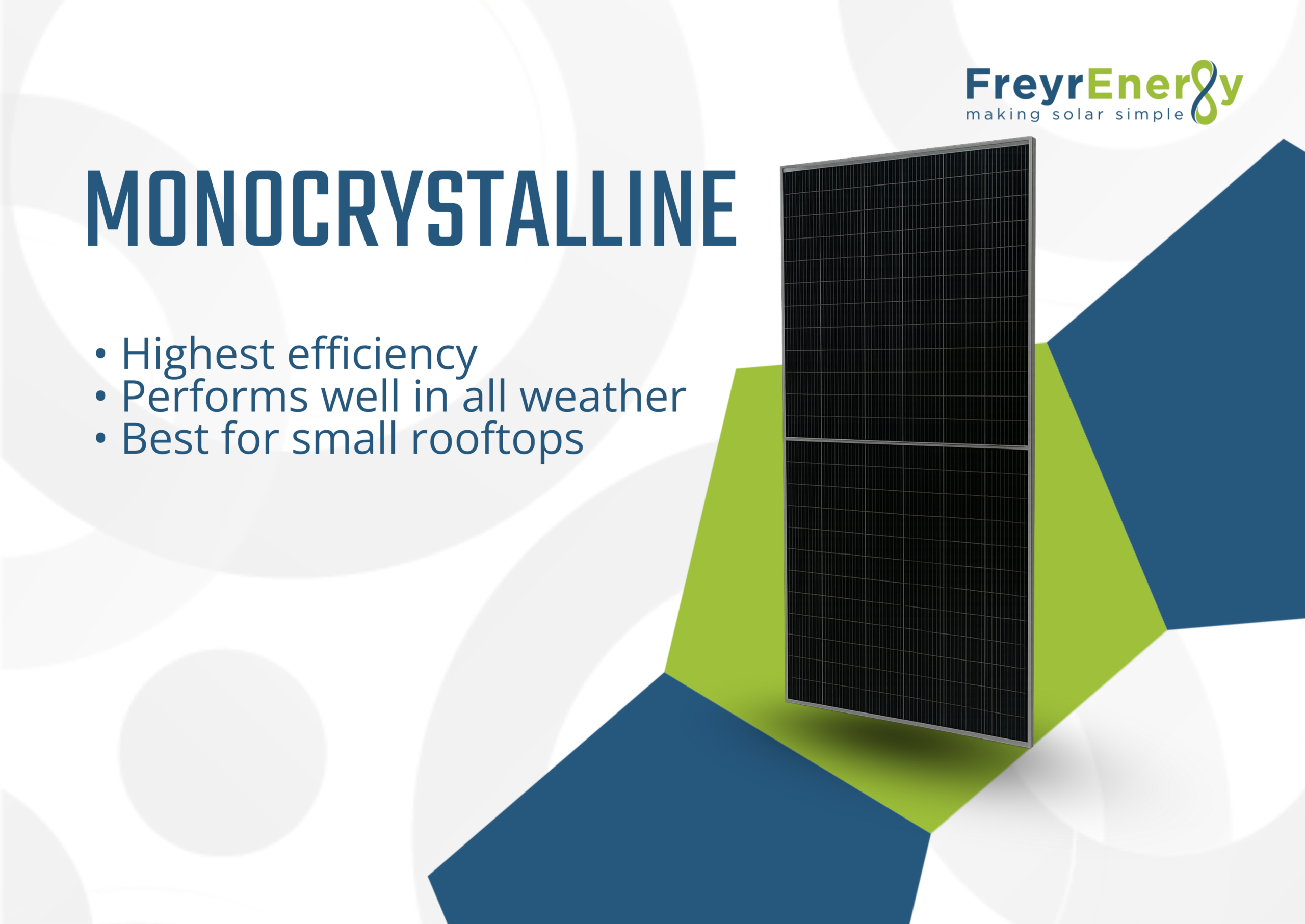
Monocrystalline solar Panels are made from a single, pure silicon crystal. They appear black and offer the highest solar panel efficiency among common panel types. Fewer panels are needed for the same power output, making them ideal for residential and commercial solar panel installations in India.
Key Points:
- Efficiency: 17–22% – high power output
- Black color – pure silicon structure
- Performs well in low-light & high-temperature conditions
- Longer lifespan and lower degradation
- Higher cost than Poly-SI
- Ideal for rooftops with limited space
- Best for customers seeking premium performance and maximum output
2. Polycrystalline Solar Panels (Poly-SI)
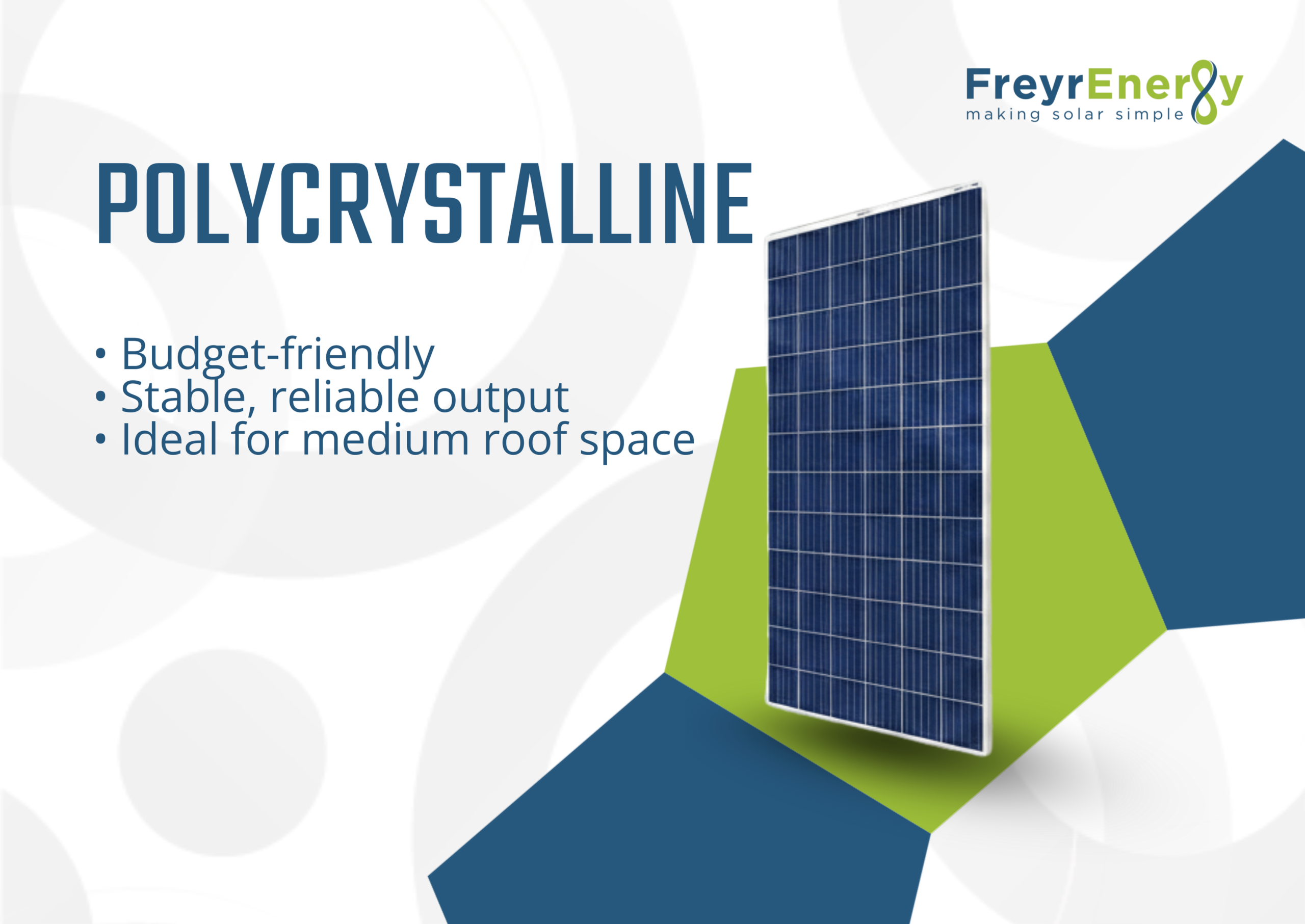
Polycrystalline solar panels are made by melting multiple silicon fragments together. Their blue color makes them easy to identify. These panels are more budget-friendly but slightly lower in efficiency compared to monocrystalline solar cells.
Key Points:
- Efficiency: 15–17% – balanced performance
- Blue color – due to multiple silicon crystals
- More affordable than Mono-SI
- Suitable for moderate climates
- Requires slightly more space
- Good choice for homeowners with medium budgets and sufficient roof area
3. Thin Film Solar Panels
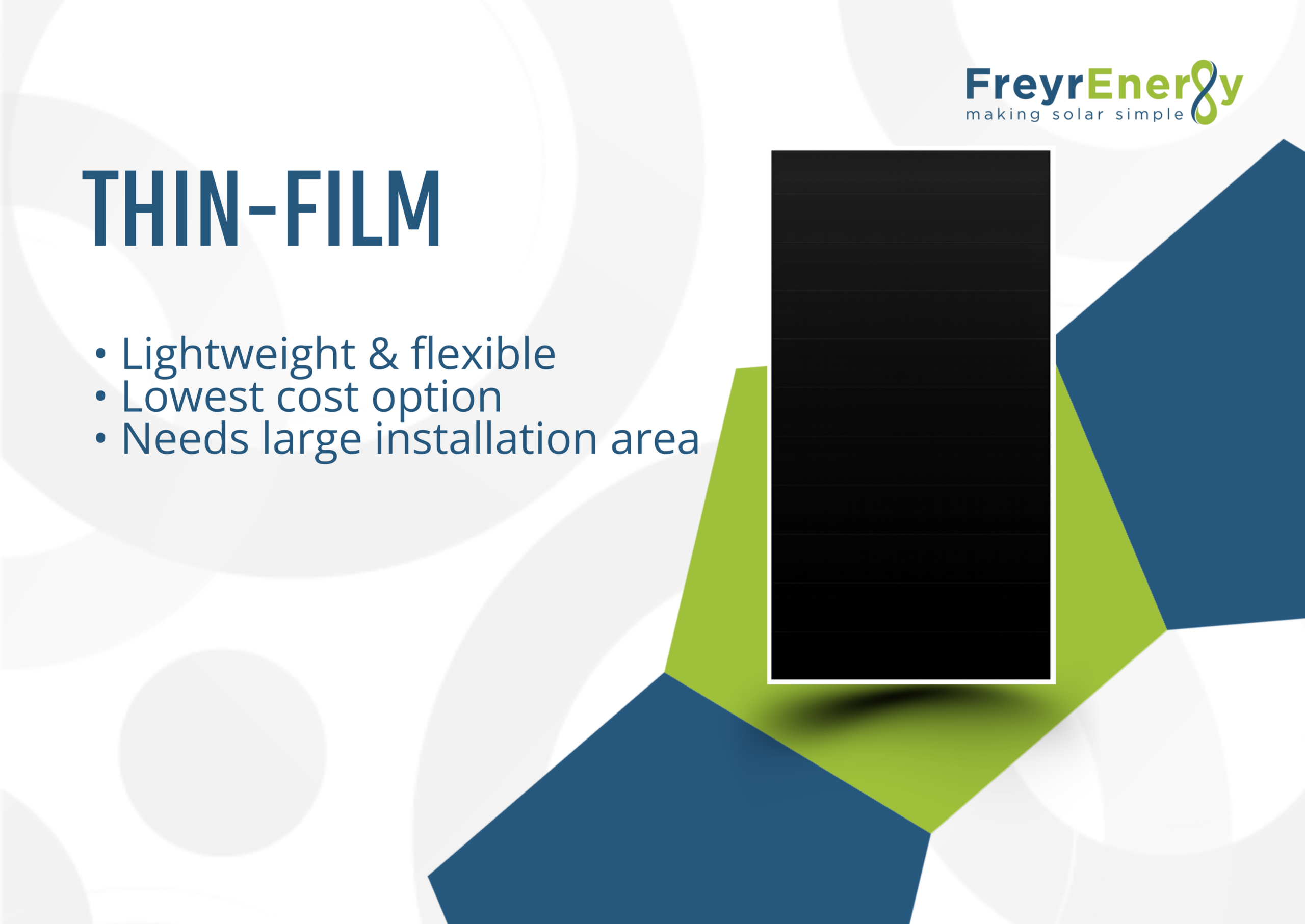
Thin film solar cells are made using materials like Cadmium Telluride instead of silicon. They are lightweight, flexible, and easy to install but have lower efficiency, so they are not suitable for most residential rooftops.
Key Points:
- Lightweight and flexible design
- Lowest efficiency among common solar panel types
- Requires large installation area
- Cheaper but produces less power
- Best for industrial roofs, warehouses, and large open spaces
4. Bifacial Solar Panels
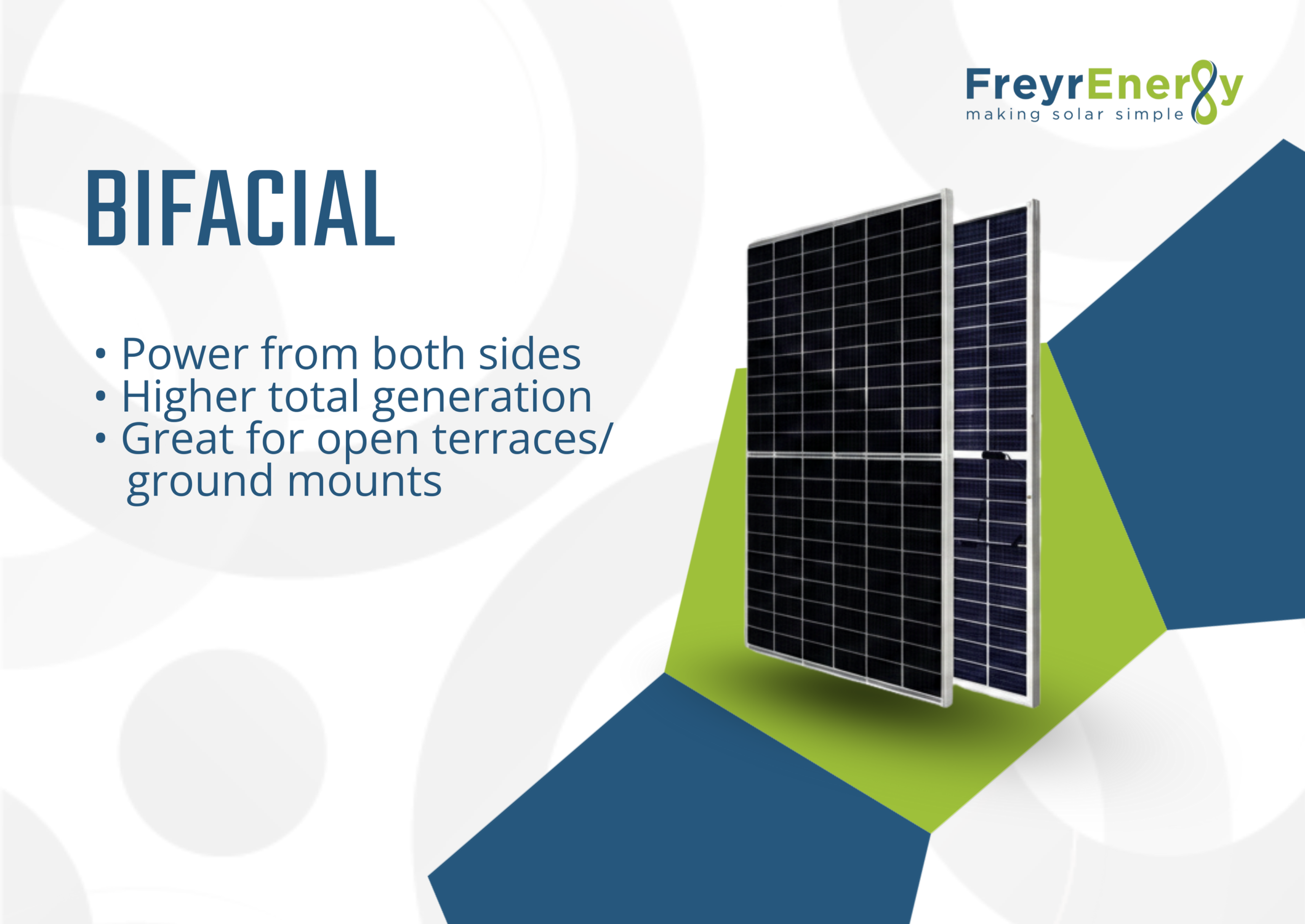
Bifacial solar panels generate electricity from both front and back sides. The rear side captures reflected sunlight from the ground or nearby surfaces, increasing total energy generation, especially on reflective rooftops.
Key Points:
- Generates power from both sides
- Higher overall output than traditional panels
- Performs best on reflective surfaces (white roofs, open terraces)
- Slightly higher cost but stronger long-term returns
- Suitable for ground-mounted systems and commercial sites
5. TOPCon Solar Cell
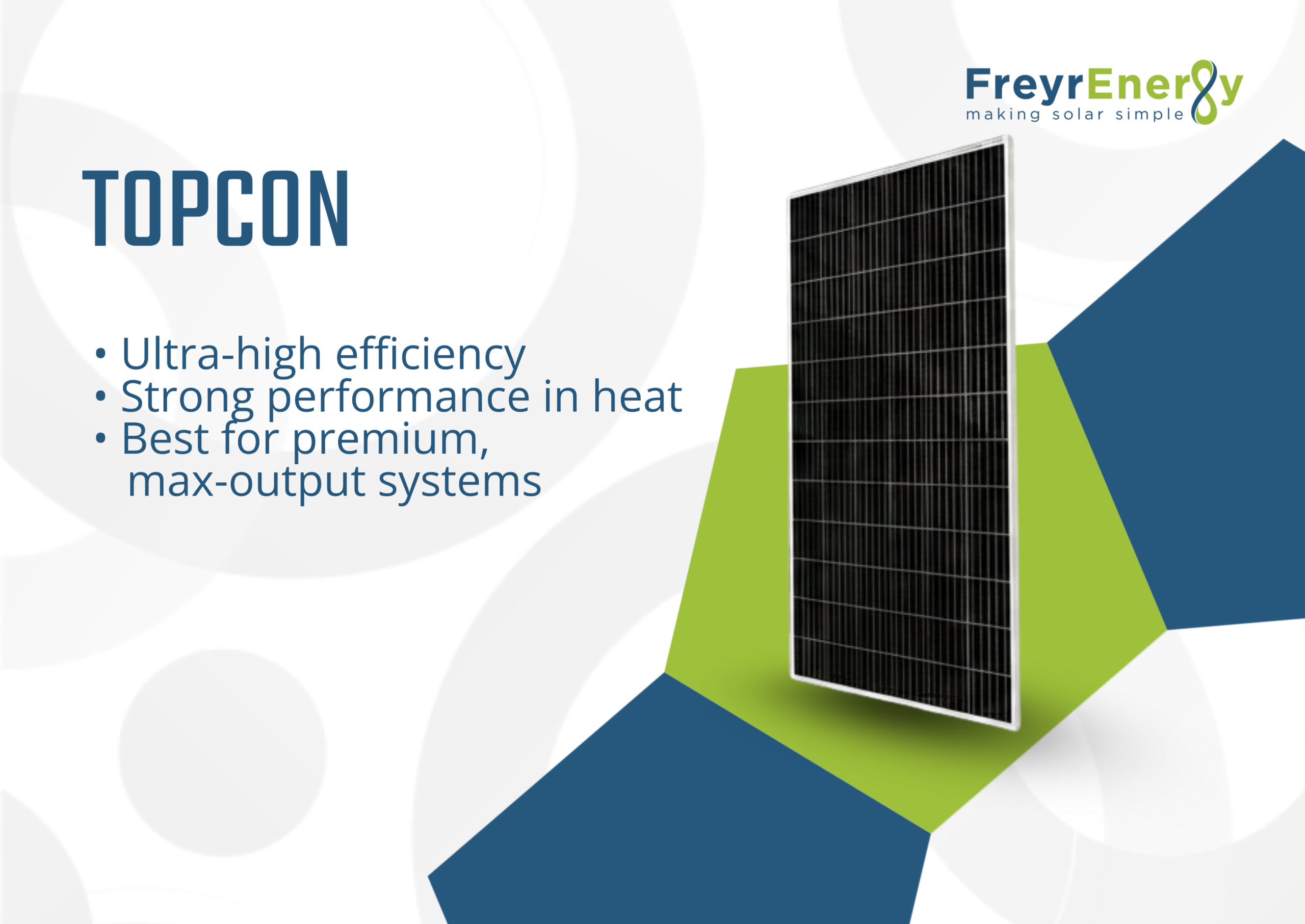
TOPCon solar cells are advanced monocrystalline panels with a special passivation layer that reduces energy loss. They provide extremely high solar panel efficiency and perform well in high-temperature conditions, making them ideal for Indian climates.
Key Points:
- Efficiency: 23–24%+ – ultra-high performance
- Advanced design reduces energy loss
- Performs well in hot and humid weather
- More durable and reliable than traditional Mono-SI panels
- Higher upfront cost
- Best for customers seeking maximum output and advanced technology
Which Solar Panel Should You Choose?
Choosing the right solar panel depends on:
- Roof size
- Budget
- Required power output
- Location and sunlight availability
- Long-term energy goals
High-efficiency options like monocrystalline solar panels or TOPCon solar cells are best for limited roofs or premium installations. Polycrystalline panels are suitable for moderate budgets with adequate rooftop space. Bifacial and thin-film panels are ideal for large-scale or commercial projects.
Why Choose Freyr Energy?
Freyr Energy ensures your solar panel installations in India deliver maximum value:
- Expert guidance to select the right type of solar panel
- Optimized system design for higher solar panel efficiency and long-term savings
- Professional installation and reliable support
- Durable, high-quality components ensuring long-term performance
With Freyr Energy, you make a smart investment in clean, sustainable energy with maximum efficiency and savings.