
These days, MC4 connectors are quite useful for installing solar panels. When people talk about solar systems, they usually mean solar panels and inverters. These tiny connectors are very important for making sure that DC current flows safely and well.
Even the greatest solar panels need connectors that will last. MC4 connections safely connect solar panels, wiring, and inverters, which keep the whole system running smoothly and reliably for a long time.
What do MC4 connectors do?
MC4 connections are common electrical connectors that are used in solar photovoltaic (PV) systems. “MC4” comes from “MC,” which means “Multi-Contact.” Stäubli was the first company to make this type of connector.
4 stands for the 4 mm diameter of the contact pin.
MC4 connections were originally used in the 1990s. They quickly became the standard for solar systems all around the world because they are strong, safe, and easy to use.
Most solar systems that are put on roofs or the ground use MC4 solar connectors to connect DC safely.
Why MC4 Connectors are Important in Solar Systems
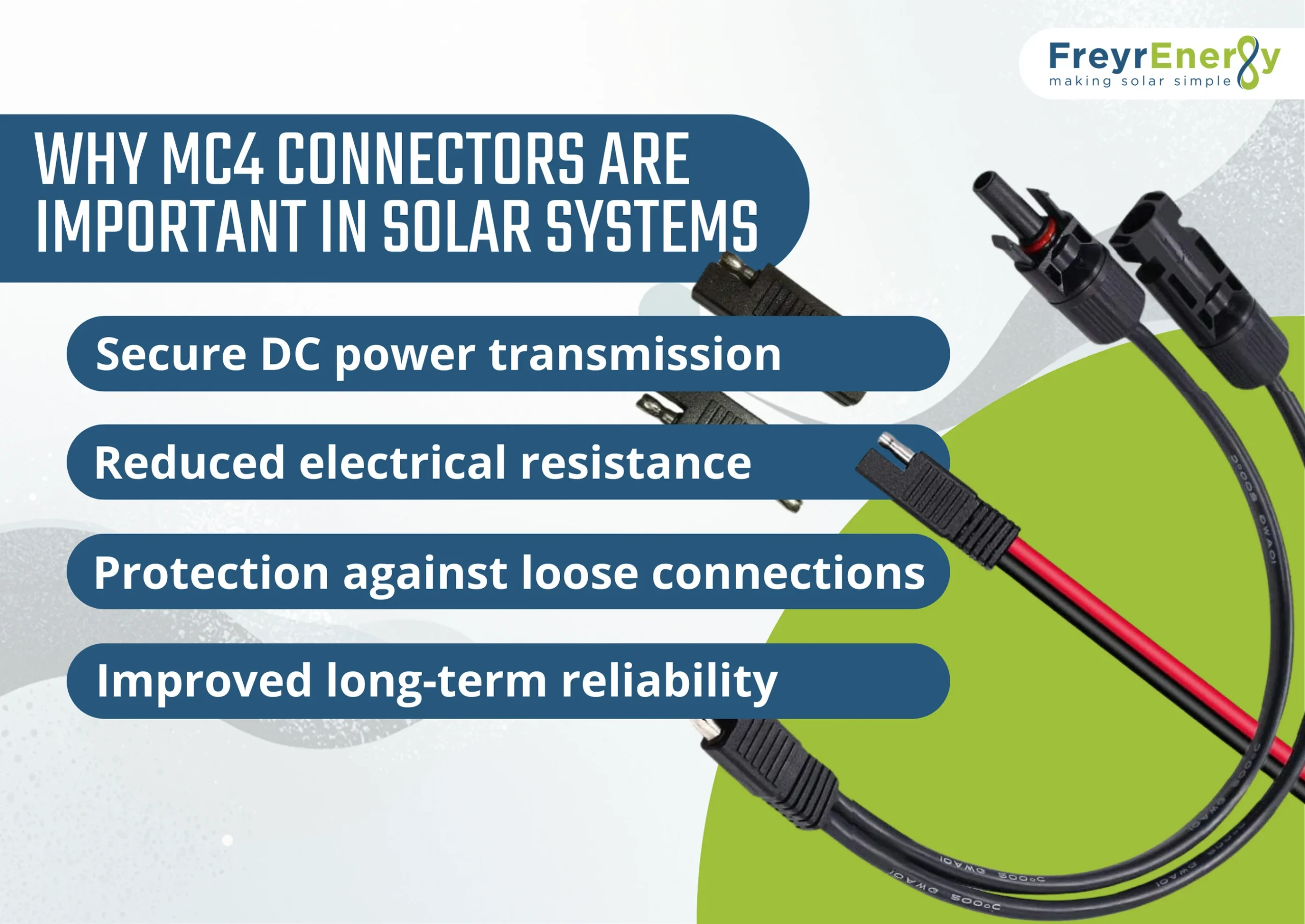
Solar panels make power in the form of direct current (DC). This power needs to get to its destination without any problems:
Solar Panel → Solar Cable → Inverter → Distribution Panel
MC4 connectors make sure that
- Safe transfer of DC power
- Less electrical resistance
- Protection from loose connections
- More reliable in the long run
Article that is related: What is the difference between AC and DC?
A poor connection could cause power loss, overheating, or safety issues. MC4 connectors solve these problems by using a sealed locking mechanism designed for outdoor solar installations.
Key Features of MC4 Solar Connectors
Strong Construction
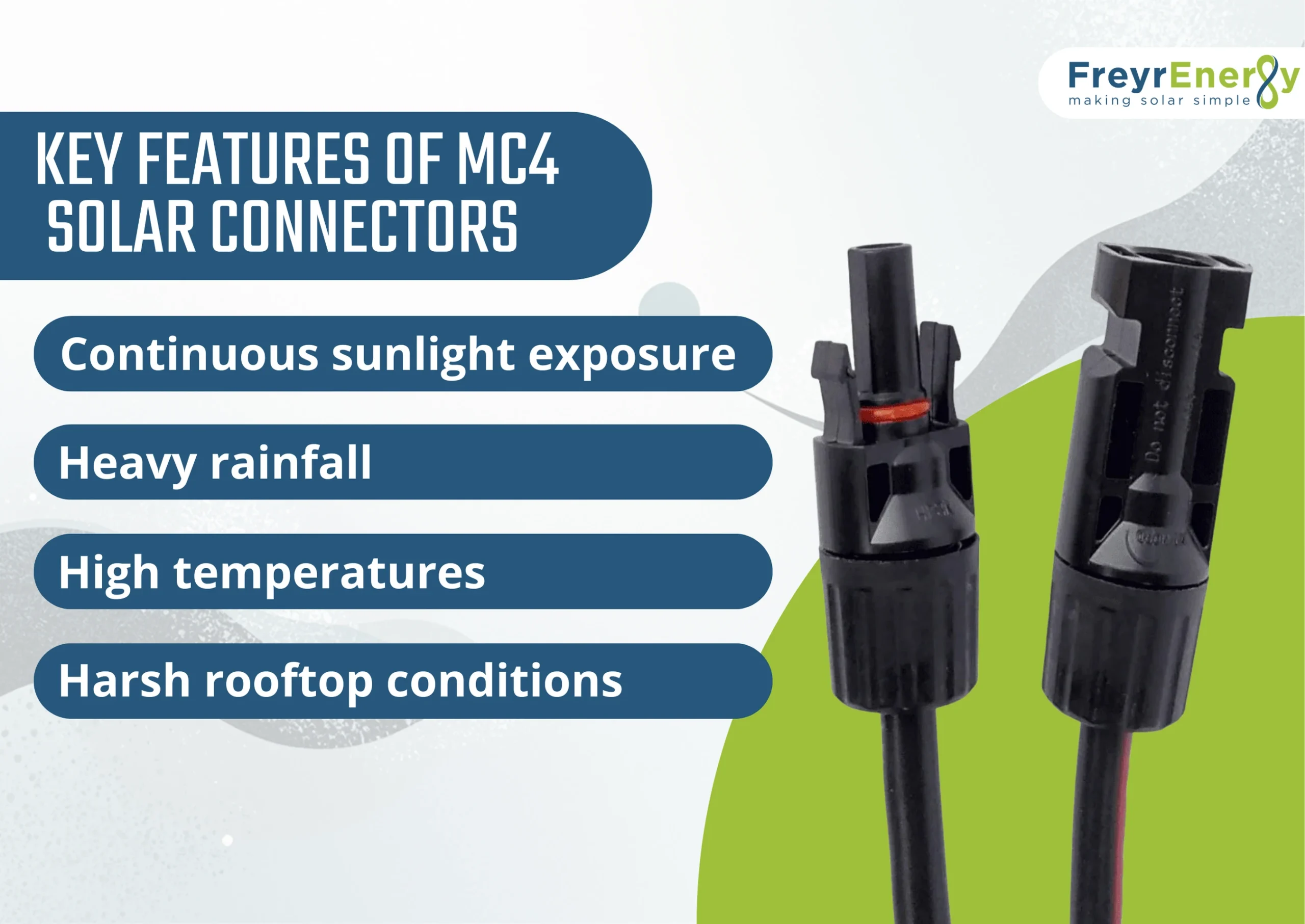
Materials that can handle UV light and heat make up MC4 connectors. They are designed to withstand:
- Continuous sunlight exposure
- Heavy rain
- Extreme temperatures
- Harsh rooftop environments
Most modern MC4 connectors support 1000V or 1500V systems, making them suitable for residential solar installations and commercial solar installations.
Design that keeps out water and dust
MC4 connectors include sealing rings that prevent dust and water from entering the connection area. Many connectors are rated IP67 or IP68, which means they work well outdoors and resist corrosion over time.
Related Articles:
- Easy Ways to Keep Solar Panels Working During the Rainy Season
- Freyr Energy Starts Selling Self-Cleaning Solar and Hybrid Systems in India
Locking Mechanism That Is Safe
MC4 connectors have a snap-lock mechanism that prevents them from being disconnected without a special tool.
This helps to:
- Prevent accidental disconnections
- Reduce the risk of electrical arcing
- Improve overall solar system safety
How MC4 Connectors Work
When sunlight hits solar panels, they produce DC electricity.
You can connect panels using MC4 connectors in:
- Series connections to increase voltage
- Parallel connections to increase current
The combined DC power travels through solar cables to the inverter, which converts it into AC electricity for homes or businesses.
Because the connection is tight and resistance is low, power loss is minimized and system performance improves.
Different kinds of MC4 connectors
MC4 Connectors for Men and Women
- The male connector contains a metal pin
- The female connector contains a matching socket
When connected, they create a secure and reliable electrical connection between solar system components.
MC4 T-Branch Connectors
T-branch connectors are commonly used for parallel wiring.
They allow multiple solar panels to send power through a single cable, making system wiring simpler.
MC4 Y-Branch Connectors
Y-branch connectors are used in larger solar systems, such as:
They help keep solar wiring organized and efficient.
Advantages of MC4 Connectors for Solar Panels
Very Efficient
- Reduces electrical resistance
- Minimizes voltage drop
- Supports maximum solar power output
More Safety
- Reduces arc fault risks
- Prevents overheating
- Stops accidental disconnections
Little Upkeep
- Corrosion-resistant materials
- Weather-resistant construction
- Requires minimal maintenance
Things You Shouldn’t Do
Connections that aren’t tight
Improper crimping or locking can cause power loss and overheating.
Always ensure that connectors are fully locked and installed correctly.
Combining Connectors from Different Brands
Not all MC4-style connectors are compatible.
Mixing different brands can cause poor electrical contact and safety risks.
Seals that are broken
Damaged sealing rings can allow water to enter, leading to corrosion.
Always replace damaged connectors immediately to maintain waterproof protection.
Learning about the DC-to-AC ratio in solar design
In many solar systems, the solar panel capacity is slightly higher than the inverter capacity. This is known as DC overloading.
Most residential solar systems maintain a DC-to-AC ratio between 110% and 120%, as recommended by inverter manufacturers.
Example:
A 5 kW inverter can support solar panels between 5.5 kW and 6 kW.
This helps increase energy generation during low sunlight periods without overloading the inverter.
High-quality MC4 connectors ensure that higher DC currents are transferred safely and efficiently.
How to Pick Good MC4 Solar Connectors
Check voltage and current ratings
Make sure connectors match your system voltage (1000V or 1500V).
Look for certification
Choose certified MC4 connectors that meet industry safety standards.
Cable compatibility
Ensure compatibility with solar cables sized 4 mm² or 6 mm².
Avoid low-quality connectors
Cheap connectors may cause the following:
- Power loss
- Overheating
- Long-term safety risks
Conclusion
MC4 connectors are small components, but they play a critical role in the safety, efficiency, and longevity of solar panel systems.
They ensure:
- Safe DC power transmission
- Protection from environmental damage
- Reduced power loss
At Freyr Energy, we use only high-quality certified MC4 connectors for every solar installation. This ensures maximum performance and long-term reliability—because every connection matters in solar systems.