
Rising electricity costs are putting increasing pressure on manufacturers across India. India’s rooftop solar capacity crossed 25.7 GW in March 2026, showing that more businesses are turning to solar to reduce electricity costs and improve energy security.
High power consumption, peak-hour tariffs, and fluctuating grid electricity prices can significantly impact production costs and profit margins.
That’s why more businesses are investing in solar for factories. Today, solar for manufacturing units is more than just a sustainable choice—it’s a smart business investment.
By generating electricity on-site, factories can achieve significant commercial solar electricity bill savings, reduce dependence on the grid, and protect themselves from future tariff hikes.
But how much can a factory actually save with solar, and is it worth the investment? Let’s find out.
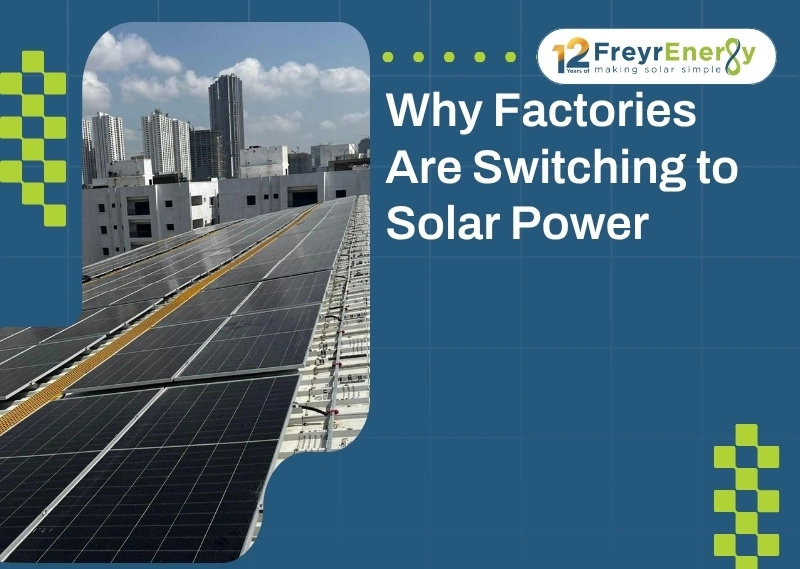
Why Factories Are Switching to Solar Power
The Challenge of Rising Industrial Electricity Costs
Electricity is one of the largest operating expenses for factories. From running heavy machinery to powering production lines, lighting, and cooling systems, industrial operations require a constant supply of electricity.
Rising industrial tariffs, demand charges, and increasing energy costs make it difficult for manufacturers to control operational expenses and maintain healthy profit margins.
Why Solar Makes Financial Sense for Manufacturers?
Installing solar for factories allows businesses to generate electricity where it is consumed. Instead of relying entirely on the grid, factories can use solar energy during working hours to reduce electricity bills and improve energy independence.
Besides lowering costs, solar for manufacturing units also supports sustainability goals, strengthens business reputation, and provides predictable electricity costs for over two decades.
How Much Can a Factory Save with Solar Panels?

The savings from solar for factories depend on electricity consumption, system capacity, operating hours, available roof space, and local tariffs. Most factories experience substantial reductions in monthly electricity bills after installing solar.
Typical Savings by Factory Size
Small manufacturing units can offset a large share of their daytime electricity needs, while medium and large factories often achieve even greater industrial solar savings because of their higher power consumption and larger rooftop areas.
Example Savings Calculation
For example, if a factory spends ₹10 lakh per month on electricity, a well-designed solar system that offsets around 50–80% of its electricity consumption could reduce monthly bills by approximately ₹5–6.5 lakh, depending on operating hours and local electricity tariffs.
Over a year, this could translate into savings of around ₹60–80 lakh. Actual savings vary based on system size, energy consumption, solar generation, and state-specific electricity regulations.
Factors Affecting Industrial Solar Savings
The overall savings depend on:
- Monthly electricity consumption
- Solar system capacity
- Daytime operating hours
- Local solar radiation
- State electricity tariffs
- Percentage of solar energy consumed on-site
Understanding Factory Solar Panel Costs
The factory solar panels cost varies because every manufacturing facility has different energy requirements. Factors such as electricity consumption, roof size, equipment quality, and installation complexity all influence the overall project cost.
What Determines Factory Solar Panel Cost?
The major cost factors include system capacity, available rooftop area, quality of solar panels and inverters, mounting structures, and the factory’s existing electrical infrastructure. A professionally designed system ensures better performance and higher long-term savings.
Average Solar Installation Costs for Factories
Instead of focusing only on the upfront investment, businesses should consider lifetime savings. A solar system can continue generating electricity for over 25 years, making it a valuable long-term asset
Additional Costs to Consider
Apart from the initial installation cost, factories should also account for ongoing maintenance expenses to keep the system operating efficiently. Commercial and industrial solar systems (typically 10 kW to 100+ kW) generally have higher overall maintenance costs due to their larger size and greater servicing requirements. However, regular cleaning, inspections, and preventive maintenance help maximize energy output, reduce unexpected breakdowns, and extend the system’s lifespan.
What Is the Payback Period for Industrial Solar Installations?
One of the biggest advantages of solar for factories is its relatively quick return on investment.
Understanding Solar ROI
Solar ROI measures how quickly the system’s savings recover the initial investment. Since factories consume large amounts of electricity, industrial solar systems usually generate substantial monthly savings.
Typical Payback Period for Factories
Most industrial solar installations recover their investment within 3 to 6 years, depending on electricity tariffs, financing options, government incentives, and system utilization.
Factors That Influence Payback Time
Payback depends on electricity consumption, tariff rates, system efficiency, financing, government policies, and proper maintenance. Choosing an experienced installer also plays an important role in improving the overall factory rooftop solar cost benefit.
Rooftop Solar vs Ground-Mounted Solar for Factories
Both rooftop and ground-mounted systems can reduce electricity costs. The right solution depends on available space and energy requirements.
Benefits of Rooftop Solar for Factories
A solar rooftop factory installation utilizes unused roof space, requires no additional land, minimizes operational disruption, and delivers significant long-term savings.
When Ground-Mounted Solar Makes Sense
Ground-mounted systems are ideal for factories with limited rooftop space or higher electricity demand. They also offer greater flexibility for future expansion.
Which Option Delivers Better ROI?
For most businesses, rooftop solar provides a faster return because it uses existing infrastructure. However, factories with large energy requirements may benefit from combining rooftop and ground-mounted systems.
Risks and Challenges of Installing Solar in Factories
Installing solar for factories requires careful planning to maximize performance and long-term savings.
Structural Considerations
Before installation, the roof should be assessed to ensure it can safely support the solar system.
Roof Condition and Load Capacity
Roof damage, shading, or poor structural condition can affect system performance. Addressing these issues before installation helps maximize energy generation.
Maintenance Requirements
Regular maintenance includes cleaning solar panels, inspecting electrical connections, monitoring inverter performance, and carrying out preventive inspections. These activities help maintain optimal system performance, minimize downtime, and ensure consistent energy generation throughout the system’s lifespan
Choosing the Right Solar Partner
Working with an experienced solar company helps businesses avoid poor system design, low-quality components, and unnecessary maintenance costs.
How Freyr Energy Helps Factories Maximize Solar Savings?
At Freyr Energy, we understand that every factory has unique energy requirements. That’s why we design customised solar for manufacturing units based on your electricity consumption, available roof space, and future expansion plans.
From energy assessment and system design to installation, financing support, monitoring, and maintenance, we provide complete end-to-end solar solutions.
Our experienced team ensures every project is designed to maximize industrial solar savings, improve system performance, and deliver faster returns on investment.
Conclusion
Installing solar for factories is one of the smartest ways to reduce electricity costs, improve profitability, and build long-term energy security.
With lower operating expenses, faster payback, and decades of reliable power generation, solar offers manufacturers a sustainable competitive advantage.
Whether you’re planning your first industrial solar project or expanding an existing system, partnering with an experienced provider like Freyr Energy can help you maximize savings while ensuring reliable performance for years to come.