
Direct answer: India’s market includes crystalline-silicon modules such as monocrystalline and polycrystalline, cell architectures such as PERC, TOPCon and HJT, and module formats such as half-cut and bifacial. A panel can carry several labels at once. Choose using dimensions, power, efficiency, temperature coefficient, warranties, certifications, mechanical loads, compatibility and project eligibility requirements. Because these labels overlap, compare exact datasheets, dimensions, temperature coefficient, degradation, mechanical ratings, certifications and warranties for the proposed site.
Introduction
Terms such as monocrystalline, TOPCon, half-cut and bifacial are often presented as competing “types,” even though they describe different layers of a module. That makes product comparisons harder than necessary. This guide creates a clear taxonomy, compares the technologies used in India, explains efficiency and temperature considerations, covers ALMM and DCR relevance, and provides a specification-led checklist for choosing panels for homes, businesses and open sites.
Quick Takeaways
- Mono/poly, PERC/TOPCon and bifacial describe different technology layers.
- Higher efficiency helps when roof area is constrained.
- Temperature coefficient and degradation affect lifetime energy.
- Bifacial gain depends on rear irradiance and layout.
- Verify DCR, ALMM and certifications for the project’s eligibility.
Solar-panel terminology at a glance
Label layer | Examples | What it describes |
|---|---|---|
Silicon structure | Mono, poly | Wafer/crystal structure |
Cell architecture | PERC, TOPCon, HJT | Cell design |
Cell layout | Half-cut, multi-busbar | Electrical/mechanical arrangement |
Module format | Monofacial, bifacial | Light collection surfaces |
Project eligibility | DCR, ALMM | Policy/procurement compliance |
Solar panels convert sunlight into direct-current electricity. An inverter then converts it into alternating current that can power appliances and equipment.
The main types of solar panels in India include monocrystalline, polycrystalline and thin-film panels. Bifacial and TOPCon refer to additional module features or cell technologies, so they can overlap with monocrystalline panels.
1. Monocrystalline Solar Panels
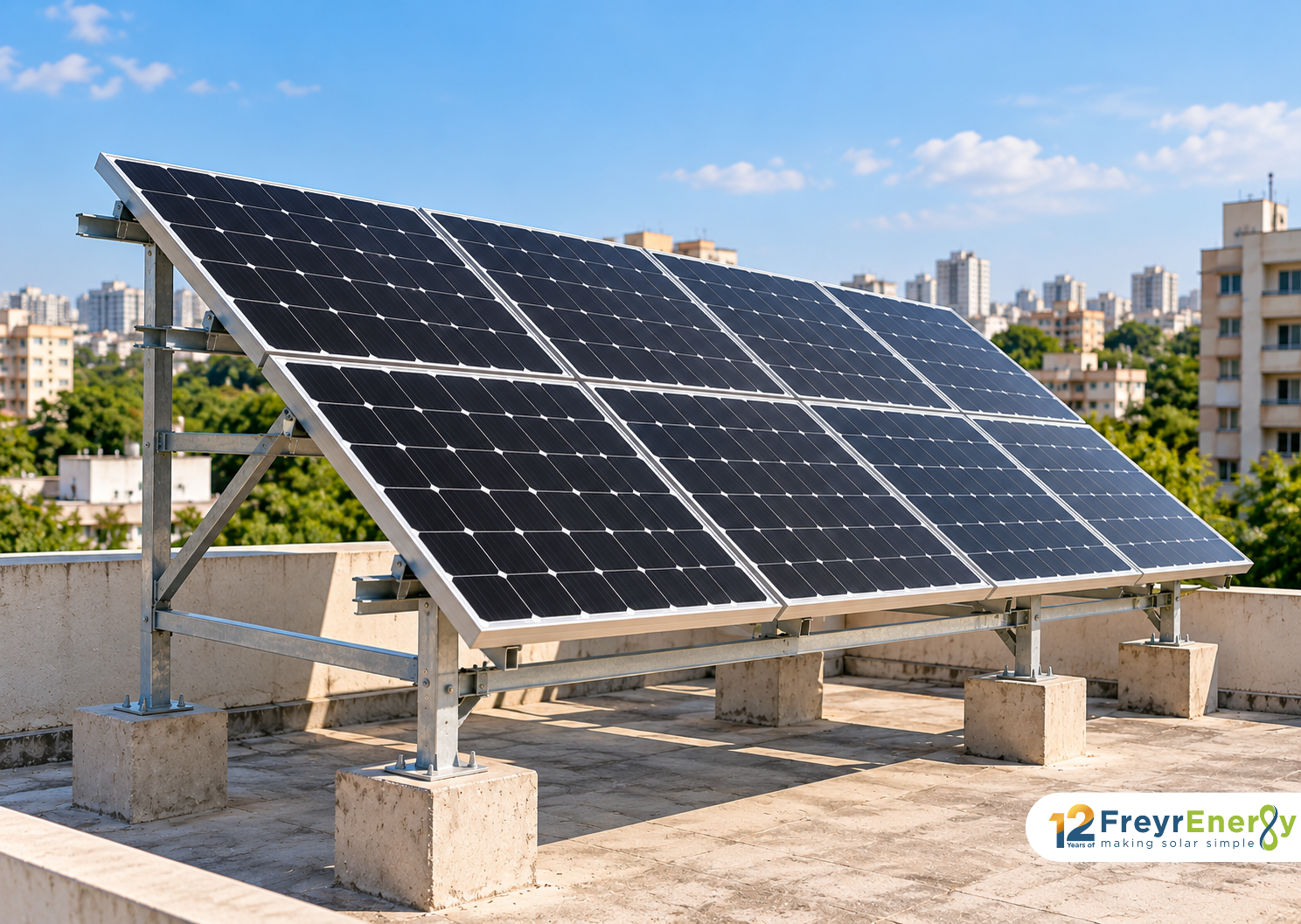
Monocrystalline solar panels are manufactured using single-crystal silicon cells. They generally have a black appearance and offer higher efficiency than older polycrystalline modules.
Key features
- High output from limited roof space
- Suitable for homes and commercial properties
- Generally higher efficiency than polycrystalline panels
- Attractive, uniform appearance
- Usually more expensive than basic polycrystalline modules
Monocrystalline panels are commonly selected for rooftops where available installation space is limited.
2. Polycrystalline Solar Panels
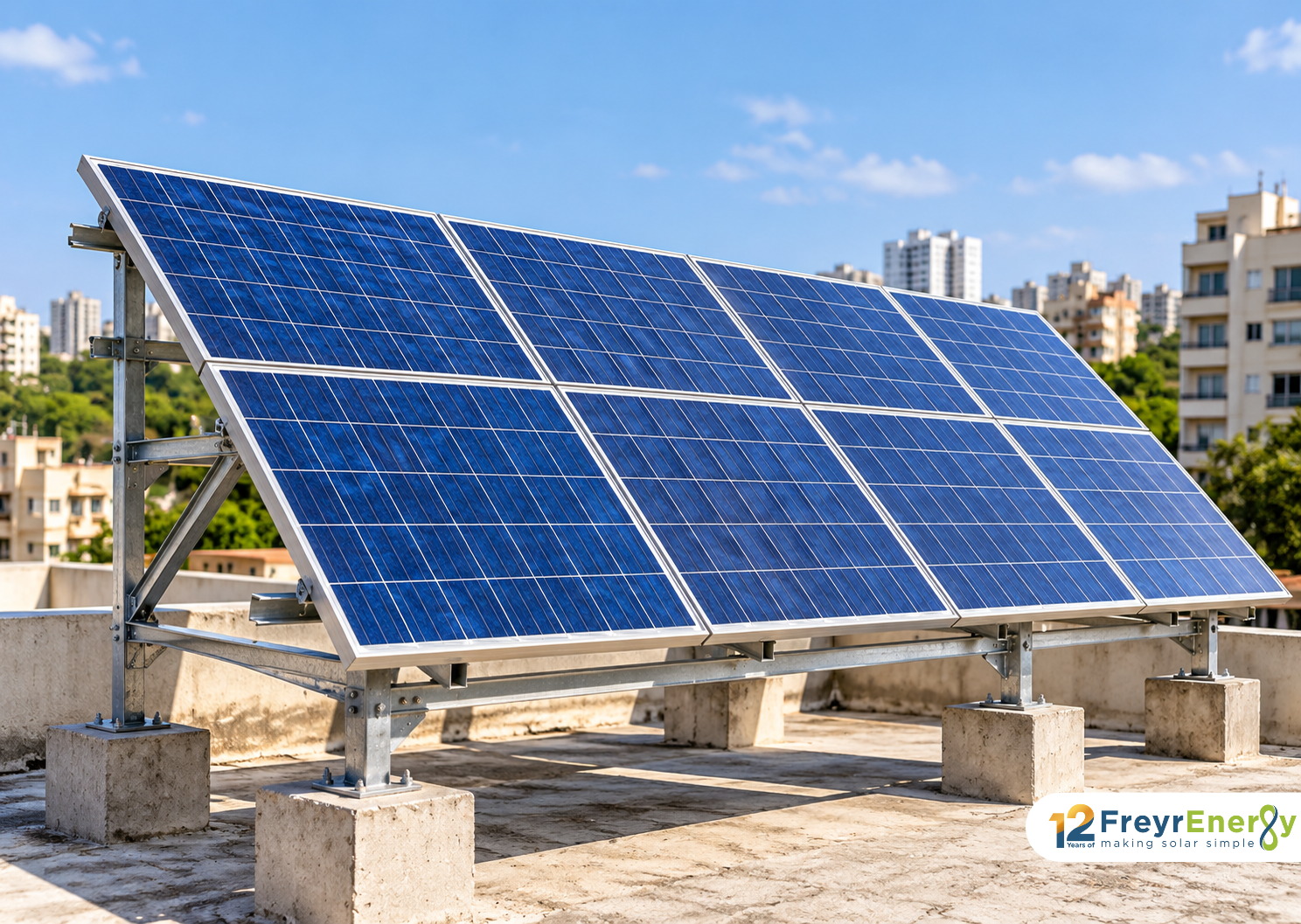
Polycrystalline solar panels are made from multiple silicon crystal fragments. They are usually blue and have traditionally been more affordable than monocrystalline panels.
Key features
- Lower initial price in many product ranges
- Established and durable technology
- Generally lower efficiency than monocrystalline panels
- Requires more area for the same system capacity
- Suitable where sufficient roof or ground space is available
As monocrystalline technology has become more affordable, polycrystalline modules are less common in new premium installations. Product availability varies by manufacturer.
3. Thin-Film Solar Panels
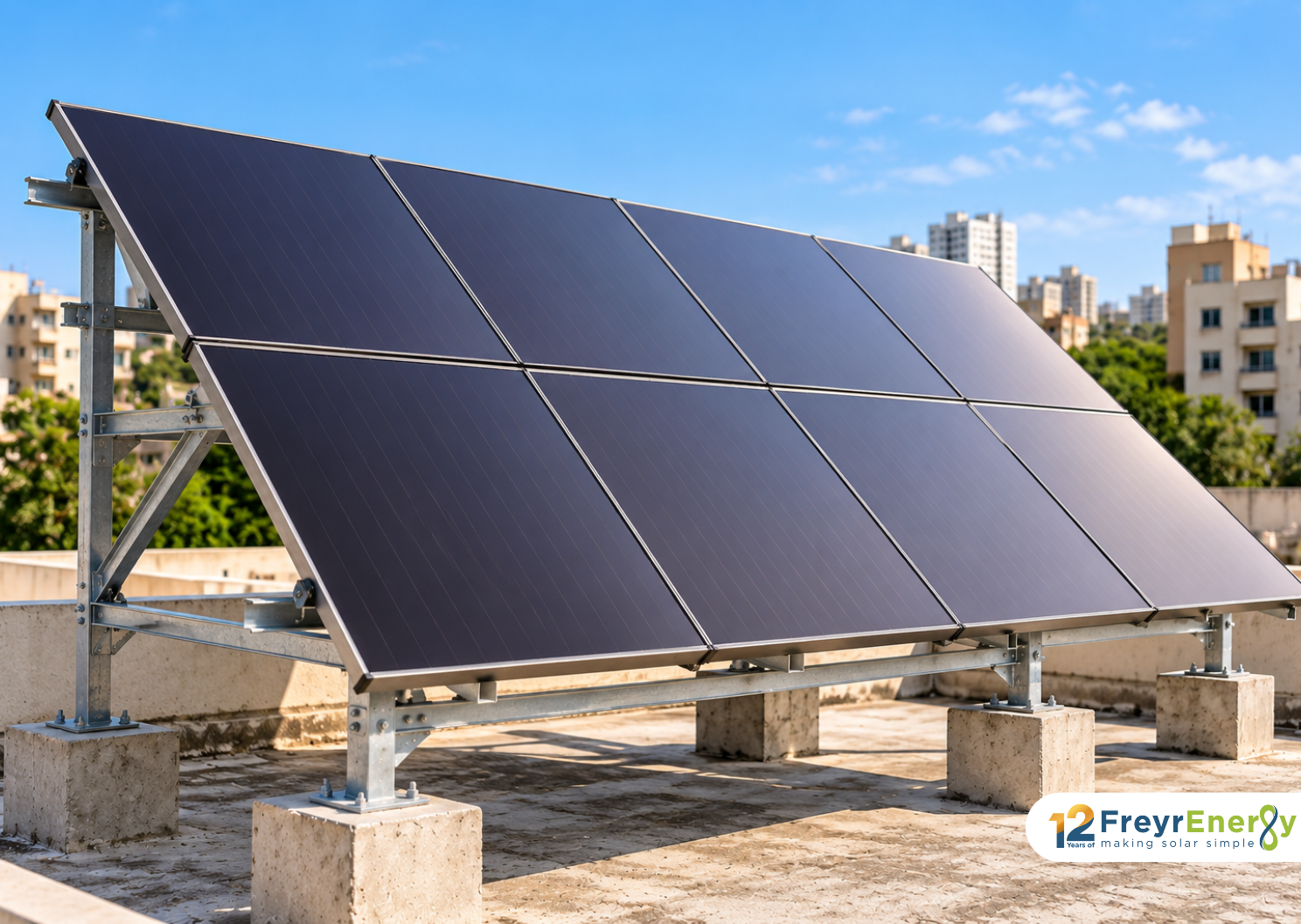
Thin-film solar panels are manufactured by depositing thin layers of photovoltaic material onto glass, metal or another supporting surface. Commercial technologies include cadmium telluride and CIGS.
Key features
- Lightweight options are available
- Some products can be flexible
- Usually lower efficiency than crystalline-silicon modules
- Requires more installation area for the same capacity
- Can suit large industrial roofs and specialised applications
Thin-film panels are generally less suitable for small residential rooftops where maximum output per square metre is important.
4. Bifacial Solar Panels
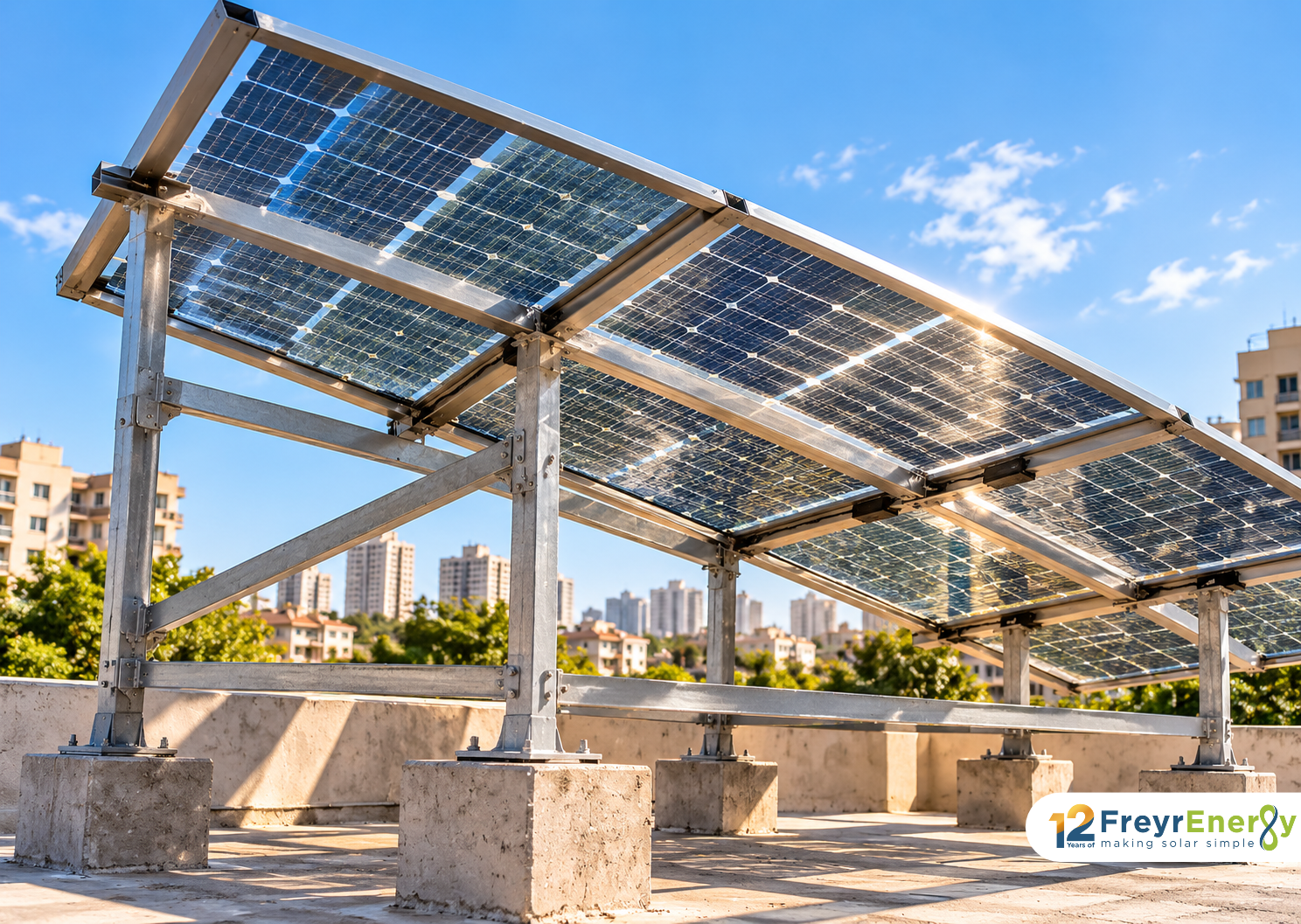
Bifacial solar panels capture direct sunlight through the front and reflected light through the rear.
Bifacial is a module design rather than a separate semiconductor category. A bifacial panel may also use monocrystalline TOPCon cells.
Key features
- Generates electricity from both sides
- Performs best with sufficient rear clearance
- Benefits from reflective surfaces
- Suitable for elevated rooftops and ground-mounted systems
- Additional output depends heavily on installation design
A bifacial panel will not automatically outperform every monofacial panel. Surface reflectivity, shading, mounting height and row spacing determine the rear-side contribution.
5. TOPCon Solar Panels
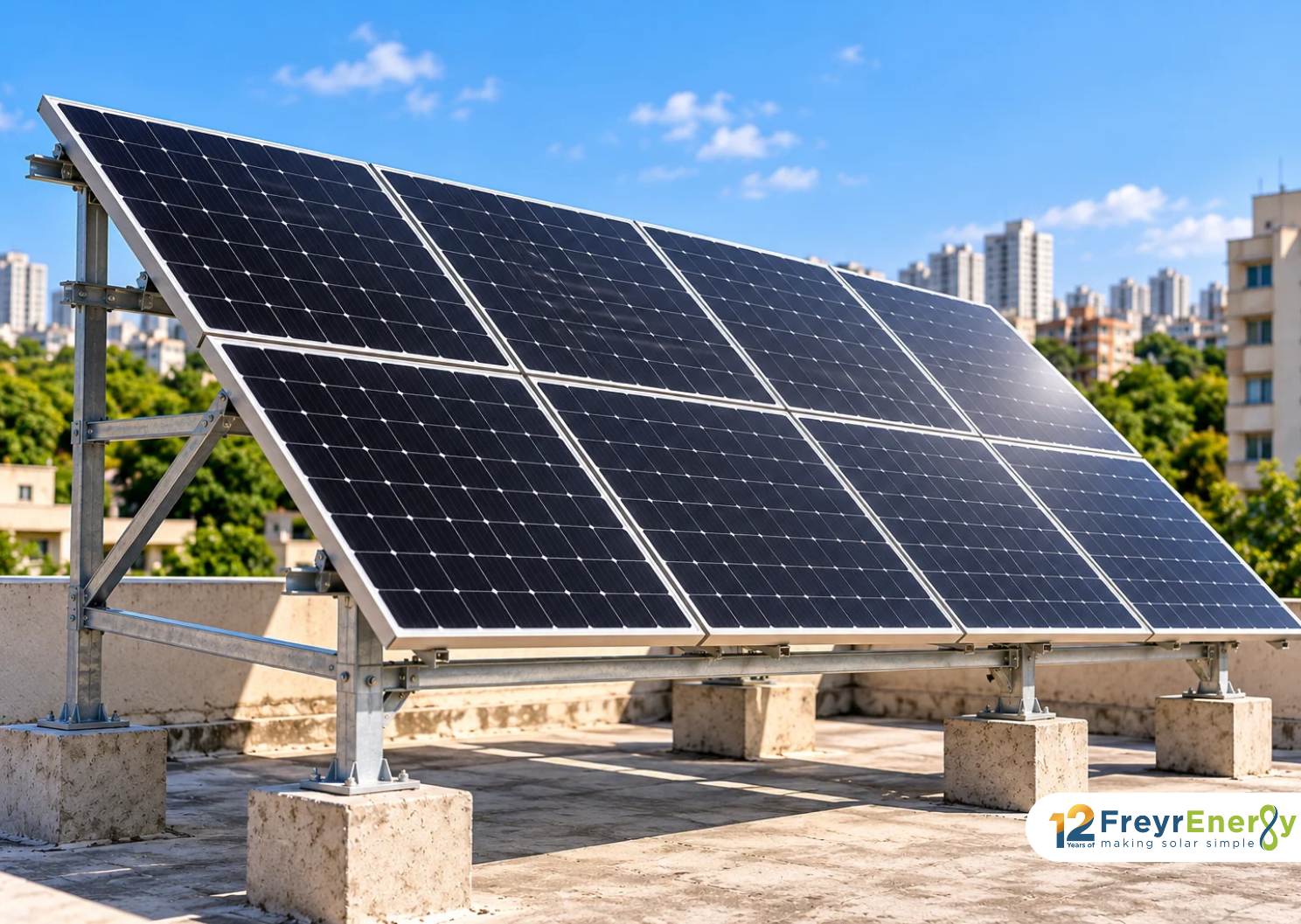
TOPCon solar panels use tunnel-oxide passivated-contact cell technology to reduce electrical losses. Most commercial TOPCon modules use high-efficiency monocrystalline, n-type cells.
Key features
- High module efficiency
- Strong output from limited space
- Lower degradation potential in many product designs
- Available in monofacial and bifacial formats
- May cost more than conventional panels
TOPCon has become increasingly common in modern solar-module production, but performance and warranties still vary between manufacturers and models.
Which Solar Panel Is Best for You?
There is no single panel that is best for every installation. Consider:
- Available roof or ground space
- Required system capacity
- Panel efficiency and wattage
- Local weather and shading
- Product and performance warranties
- Manufacturer credentials
- Installation design
- Budget and expected generation
High-efficiency monocrystalline or TOPCon panels are often suitable for space-constrained rooftops. Bifacial modules can work well on elevated structures or reflective surfaces, while thin-film panels may suit selected large or specialised projects.
Eligible residential customers seeking a government subsidy should also confirm that the modules meet the applicable domestic-content and scheme requirements. Review the current solar-subsidy conditions before selecting equipment.
Use a Clear Technology Taxonomy
Layer | Examples | Question it answers |
|---|---|---|
Semiconductor family | Crystalline silicon, thin film | What light-absorbing material is used? |
Wafer type | Monocrystalline, polycrystalline | How is the silicon crystal structured? |
Cell architecture | PERC, TOPCon, HJT | How is the cell designed to reduce losses? |
Cell/module format | Half-cut, shingled, multi-busbar | How are cells interconnected and packaged? |
Light collection | Monofacial, bifacial | Can the rear side contribute energy? |
These categories overlap. A product can be monocrystalline, n-type TOPCon, half-cut and bifacial at the same time. A comparison that treats those four labels as mutually exclusive is technically misleading.
Specifications That Matter More Than the Label
Specification | Why it matters | How to compare |
|---|---|---|
Rated power and tolerance | Defines tested nameplate output | Use the same standard test basis and tolerance |
Module efficiency and dimensions | Determines watts per usable roof area | Compare full module area and layout, not efficiency alone |
Temperature coefficient | Indicates output sensitivity to cell temperature | A less negative power coefficient is generally favourable |
Degradation terms | Affect warranted long-term output | Compare first-year and annual degradation wording |
Mechanical load and construction | Relate to wind, snow and handling | Match certified ratings and structure design to the site |
Product warranty | Covers defects under stated conditions | Read issuer, term, exclusions, labour and claim route |
Performance warranty | Promises a power-retention curve | Do not confuse it with defect or service cover |
Where Bifacial Modules Add Value
Bifacial modules can collect rear-side irradiance, but the gain depends on ground reflectivity, mounting height, row spacing, rear obstruction and inverter design. A flush or closely spaced rooftop may offer limited rear exposure. Ask for a bifacial energy model with the assumed albedo and geometry rather than applying a universal percentage gain.
How to Choose for Different Sites
- Space-constrained home: prioritise watts per usable area, module dimensions, shade layout and service support.
- Hot industrial roof: compare temperature behaviour, ventilation, mechanical design and fire-safe access.
- Elevated or open ground mount: evaluate wind and mechanical loads, corrosion, bifacial geometry and cleaning access.
- Subsidy-linked residential project: verify current DCR, ALMM and scheme requirements for the exact model.
- Budget-sensitive project: compare lifetime energy and complete warranty support, not only module purchase price.
Panel Choice Cannot Rescue a Weak System Design
High-efficiency modules still underperform when shaded, poorly ventilated, mismatched to the inverter or installed with weak connectors, structure or protection. Select the panel and inverter together, using the proposed string voltages, currents, MPPT arrangement, temperature range and clipping assumptions. The final bill of materials should lock the approved models or define an equivalent-substitution process.
PERC, TOPCon and HJT in Plain Language
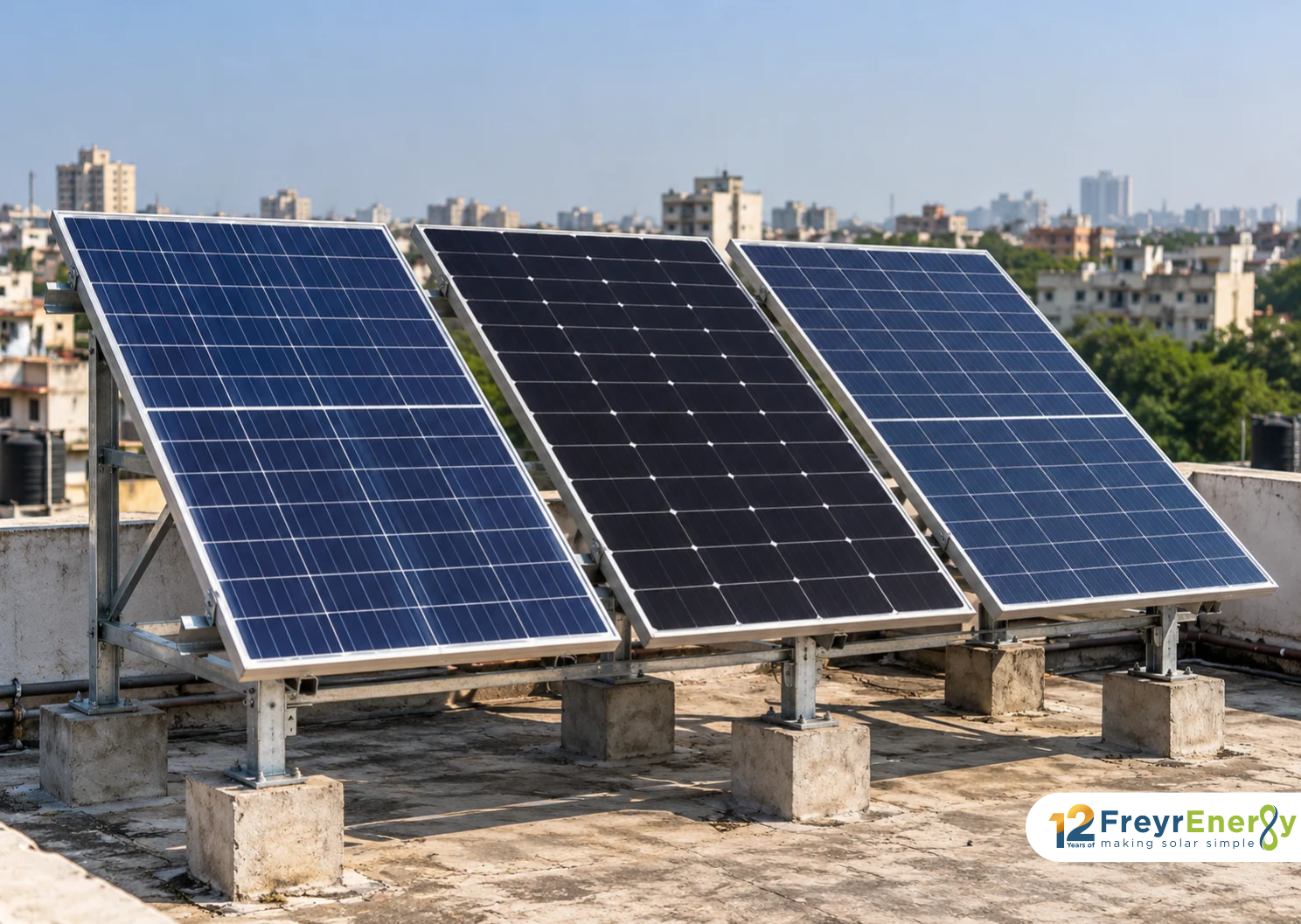
PERC adds rear-side cell passivation to reduce recombination losses and became a mainstream improvement over older conventional cells. TOPCon adds a passivated contact structure and is commonly associated with n-type cells and improved efficiency or degradation characteristics in suitable products. HJT combines crystalline silicon with thin amorphous-silicon layers. Performance depends on the complete module design and model; the architecture name alone is not a quality guarantee.
Monocrystalline, Polycrystalline and Thin Film
Monocrystalline silicon dominates many current high-efficiency rooftop offerings. Polycrystalline modules can still exist in older systems or price-sensitive supply, but generally offer less power per area. Thin-film technologies can offer different temperature, weight or low-light characteristics and may suit specialised applications, but require product-specific area, mounting, availability and service assessment.
How Warranty Language Can Mislead
A long performance warranty usually defines a minimum output curve under specified conditions; it does not promise the system’s annual generation or cover every defect, labour cost or transport expense. Compare the separate product warranty, performance warranty, installation workmanship warranty and service process. Record who will test a suspected underperforming module and who pays to remove and replace it.
Technology Comparison Without Category Errors
Term | Category | Can coexist with |
|---|---|---|
Monocrystalline | Wafer/crystal type | PERC, TOPCon, HJT, half-cut, bifacial |
PERC | Cell architecture | Monocrystalline, half-cut, monofacial/bifacial |
TOPCon | Passivated-contact cell architecture | Monocrystalline, n-type, half-cut, bifacial |
HJT | Heterojunction cell architecture | Monocrystalline and bifacial formats |
Half-cut | Cell/module format | PERC, TOPCon, mono and bifacial |
Bifacial | Front-and-rear light collection | PERC, TOPCon, HJT and multiple formats |
Datasheet Comparison Table
Specification | What a stronger value may mean | Caution |
|---|---|---|
Rated power/efficiency | More capacity in a given module area | Dimensions and layout still control roof fit |
Power temperature coefficient | Less output loss as cells heat | Compare same units and test basis |
First-year/annual degradation | Higher warranted retained output | Warranty is not a generation guarantee |
Mechanical load | Certified resistance under test conditions | Structure and attachment must match site loads |
Bifaciality/rear gain | Potential rear-side contribution | Needs modelled albedo, height and spacing |
Product warranty | Longer defect coverage | Check exclusions, labour and issuer support |
Application-Based Selection
Site | Priority | Likely evaluation direction |
|---|---|---|
Small residential roof | Watts per usable area and DCR eligibility | High-efficiency mono/TOPCon models with suitable dimensions |
Hot industrial roof | Temperature, ventilation, structure and service | Compare full energy model and warranty, not label alone |
Elevated reflective site | Rear irradiance and mechanical design | Model bifacial gain explicitly |
High-wind/coastal site | Mechanical and corrosion compatibility | Model plus structure/fastener/environment assessment |
Budget project with ample area | Total lifetime energy per rupee | Compare proven models and full installed system |
Questions Google Users Ask
- Is TOPCon the same as bifacial? No; one is cell architecture and the other is light collection.
- Is monocrystalline always best? It often fits constrained roofs, but project value depends on complete design.
- Do bifacial panels always generate more? No; rear-side exposure and layout determine gain.
- Is a 25-year warranty a product warranty? Often it is a performance warranty; read both documents.
- Which panel qualifies for subsidy? Verify current DCR/ALMM and scheme requirements for the exact model.
Conclusion
The best solar panel is not selected from one marketing label. Start with the system design and available area, then compare complete datasheets, certifications, lifetime degradation, product support, mechanical conditions and compatibility. Understand that technology categories overlap and that bifacial benefit depends on the installation surface and spacing. For subsidy-linked or regulated procurement, confirm current DCR and ALMM requirements. A high-quality module still needs a high-quality structure, inverter design, protection and installation.