
Homeowners and businesses are looking at new opportunities to produce clean energy as India is fast embracing the use of renewable energy. Two of the common solutions that are being embraced include solar roof tiles and traditional solar panels. Despite the two technologies converting sunshine to electricity, the two technologies differ greatly, in terms of design, efficiency, cost, installation and their applicability on the ground.
This blog is a direct comparison of the solar roof tiles with the traditional solar panels to present to you an idea of how each one of them functions, their advantages and disadvantages, their cost in India, the government solar subsidy and which one is more feasible in 2026.
What Are Solar Roof Tiles & Traditional Solar Panels?
Solar roof tiles are roofing materials which are provided with photovoltaic cells. Instead of nailing the panels on the roof, the tiles are their roof and sources of power. This integrated design makes them eye-catching and worthy of the modern design.
The conventional solar panels that are also frequently applied in India are the photovoltaic panels mounted on the roofs with the assistance of mounting structures. They absorb sunlight and transform it into electricity through the available proven technology. It is the most popular type of rooftop solar, which is currently being used in the country.
In basic terms, the distinction is between integration and installation. The solar roof tiles replace the roof, but solar panels are installed on the roof.
How Solar Roof Tiles Work
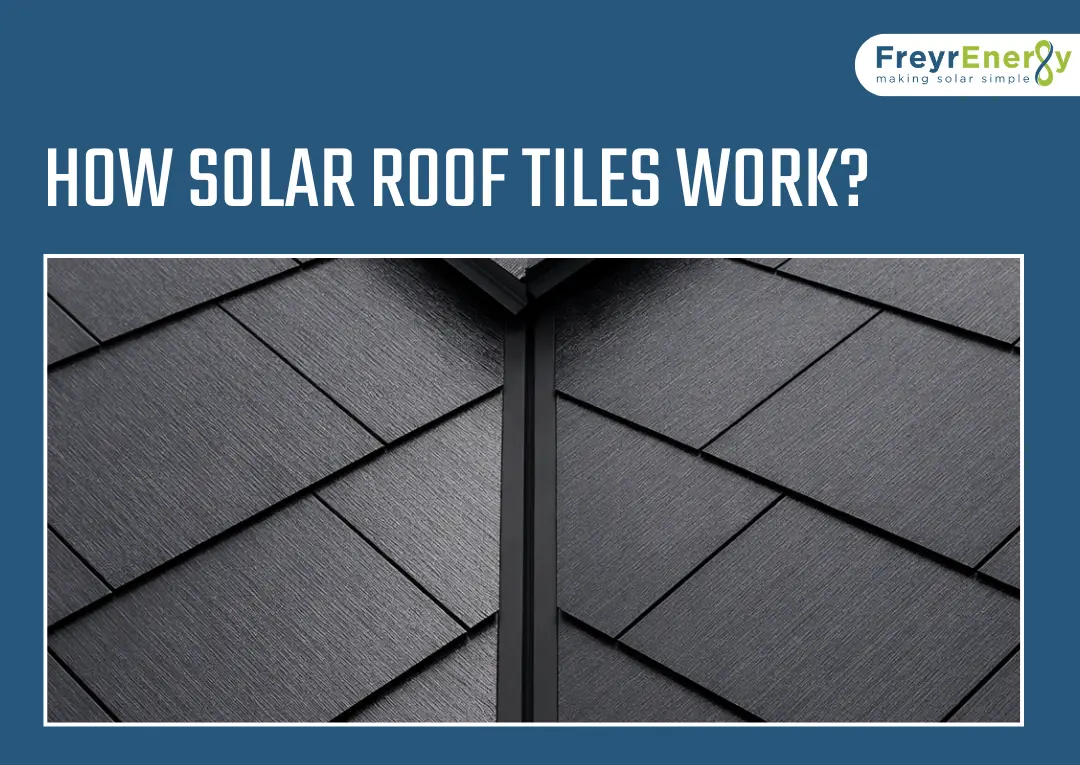
Solar roof tiles mechanism is premised on the photovoltaic cells that are embedded on roofing tiles. These tiles:
- Take in the light of the sun through the roof.
- Absorb sunlight directly from the roof surface
- Convert solar energy into electricity
- Channel power to an inverter for household or commercial use
The solar roof tiles are integrated into the roof itself, and that is why they do not need any other mounting systems, as well as being smooth in appearance.
How Traditional Solar Panels Work
The solar panel’s working principle is straightforward and proven:
- Panels absorb sunlight using photovoltaic cells
- Generated DC electricity is converted to AC using an inverter
- The net metering utilizes the power directly, stored, or exported to the grid.
Traditional panels are fitted in India as on-grid, off-grid or hybrid systems according to the power requirement.
Types & Variants
Comparing solar roof tiles and solar panels, it is necessary to know what options can be offered.
Solar Roof Tile Types in India:
- Textured solar tiles
- Glass solar tiles
- Integrated solar roofing tiles
Solar Panel Types:
Traditional panels have more efficient options whereas roof tiles lay more emphasis on appearance and integration.
Benefits of Solar Roof Tiles
The benefits of solar roof tiles in India include:
- Dual purpose: roofing + power generation
- Sleek, modern appearance
- No additional rooftop structures
- Ideal for premium homes and new constructions
- Strong architectural integration
These integrated solar roofing benefits make roof tiles attractive for design-focused projects.
Benefits of Traditional Solar Panels
The benefits of traditional solar panels are more practical:
- Higher energy efficiency
- Lower upfront cost
- Faster return on investment
- Easy availability across India
- Proven long-term performance
They can be installed in residential, apartment, business, industry and institutions.
Limitations of Solar Roof Tiles
Despite their appeal, there are notable cons of solar roof tiles:
- High initial cost
- Lower power output compared to panels
- Limited availability in India
- Complex installation and repairs
- Not ideal for retrofitting existing roofs
These are the usual drawbacks of solar roof tiles that restrain mass usage.
Limitations of Traditional Solar Panels
The disadvantages of traditional solar panels include:
- Visible rooftop structures
- Requires mounting space
- Periodic cleaning and maintenance
However, companies like Freyr Energy address maintenance concerns with India’s first self-cleaning solar system, which automatically cleans panels daily to maintain efficiency.
Solar Roof Tiles vs Traditional Solar Panels – Comparison Table
| Feature | Solar Roof Tiles | Traditional Solar Panels |
| Design | Integrated into the roof | Mounted on the rooftop |
| Efficiency | Lower | Higher |
| Cost | High | Affordable |
| Installation | Complex | Simple |
| Subsidy Eligibility | Limited | Eligible |
| ROI | Slow | Fast |
| Availability in India | Limited | Widely available |
This solar roof tiles vs traditional solar panels table clearly shows why panels dominate the Indian market.
Cost & Pricing in India (2026)
- Solar roof tiles price in India: Very high, suitable mainly for premium projects
- Solar panel installation cost in India: Much lower and affordable
With subsidies and financing, traditional panels are far more economical for most users.
Installation & Implementation
- Solar roof tile installation guide India: Ideal for new constructions or roof replacement.
- Solar panel installation on rooftop in India: The Indian market is suitable for existing homes, apartments, businesses, and industries.
Traditional panels offer faster commissioning and easier scalability.
Use Cases & Applications in India
Solar Panels Applications India:
- Residential homes
- Commercial buildings
- Industries and MSMEs
- Hospitals, schools, IT parks
Solar roof tiles are mostly limited to premium villas and architectural projects.
Related articles:
Solar Panel Installation for Home | Solar Panel Installation for Business | Solar Panel Installation for Society | Solar Panel for Hospitals | Solar Panel for Schools | Solar Panels on Hotels
Government Incentives & Subsidies in India
- Rooftop solar subsidy in India is available mainly for traditional solar panels
- Solar roof tiles typically do not qualify under standard subsidy schemes
This makes traditional panels more financially attractive.
Future Outlook: Clean Energy Roofing Trends
Looking ahead, solar energy trends in India indicate:
- Growing adoption of rooftop solar
- Gradual innovation in integrated solar materials
- Focus on efficiency, affordability, and smart monitoring
While solar roof tiles represent next-generation solar panels in India, traditional rooftop systems will remain the backbone of solar adoption in the near future.
Why Freyr Energy for Rooftop Solar?
When choosing traditional solar panels, the right installer matters. Freyr Energy offers:
- End-to-end rooftop solar solutions
- MNRE-approved systems
- Subsidy and loan assistance
- Smart monitoring via mobile Solar App
- India’s first self-cleaning solar system for better performance
- Reliable long-term support
Freyr Energy makes rooftop solar practical, efficient, and future-ready.
Conclusion
Comparing solar roof tiles with traditional solar panels, it can be said that the roof tiles are costly and ineffective when compared to the solar panels in terms of architecture. The traditional solar panels have better performance; however, they are cheaper and subsidised with a short payback time, and thus, they are the smarter choice in Indian residences and companies to date.
As clean energy roofing develops, there can be chances of combined methods, but at the moment, the conventional rooftop solar presents the surest and most cost-efficient means of renewable energy in India.